Bare root fruit trees
Prices and Delivery
Trees can be ordered any time for delivery from November until March.
Our Winter 2025/2026 prices are £25/ £29 for one and two year old trees respectively (we offer discounts for orders of 10 or more trees).
Delivery is available within 5 miles of Bath and we will quote for it. This normally adds about £10 to your order.
Eating apples - Dessert & Cooking

Delicious ‘eaters’ for the kitchen or fruit bowl.
Mostly grown on smaller ‘dwarf’ root stock, more suitable for smaller gardens and orchards.
Dessert apples
IMAGE COMING SOON
Ashmeads Kernel (Large)
A very old English desert apple dating back to the 1700s. An extremely tasty traditional eater, that will keep until February and whose flavour improves with storing. Also great for juicing. Pollination Group 4 (late), harvest October then store!
IMAGE COMING SOON
Cheddar Cross (Large or Dwarf)
Large apples with a ‘pinky light yellowy’ colour. Delicious flavour. Another cross originating from the Long Ashton Research centre in Bristol (1916).
Pollination Group 1 (very early), crops from August.
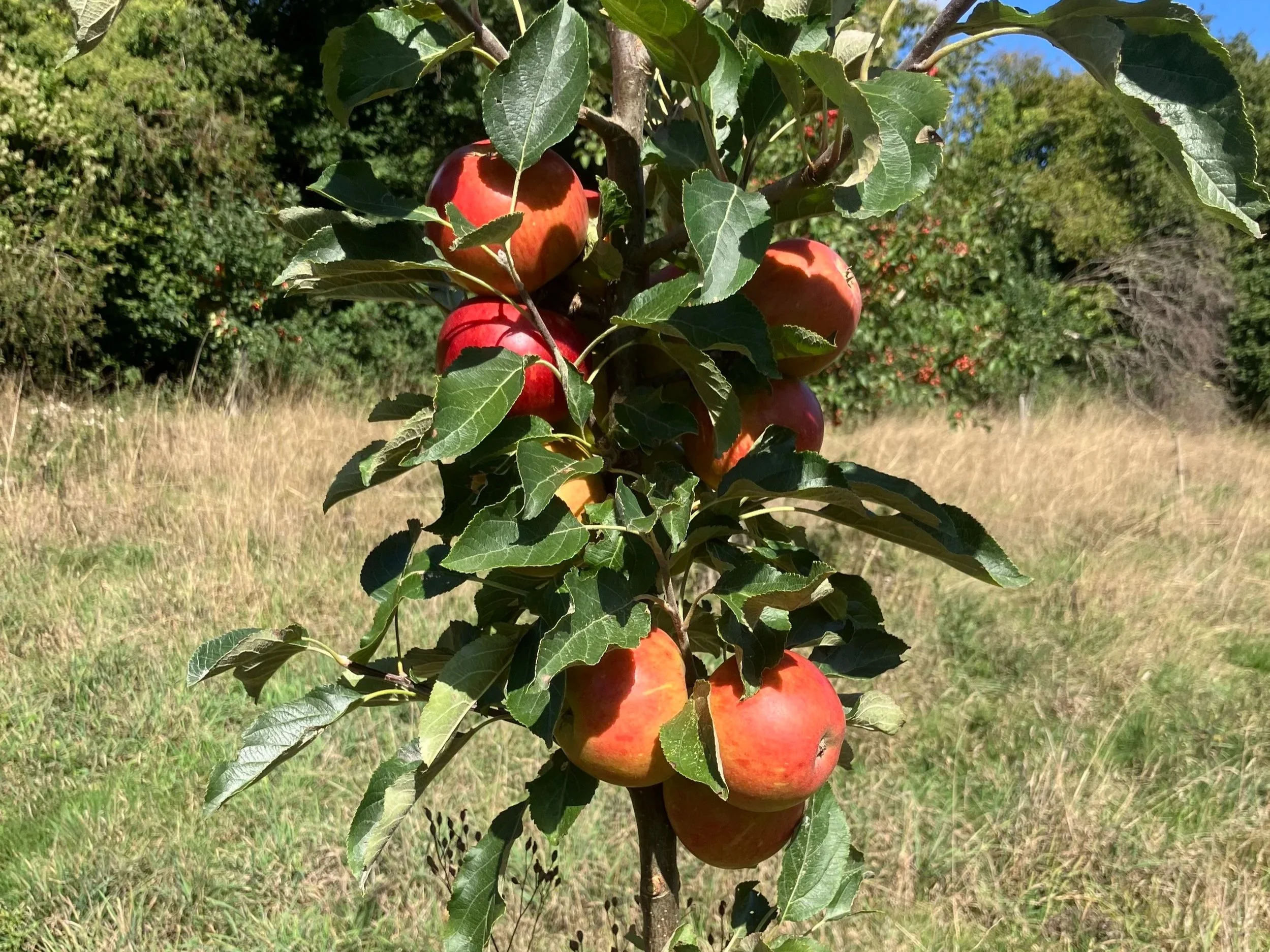
Beauty of Bath (Large or Dwarf)
Famously tasty local eater. Supposedly the tastiest apple there is. But eat them quick, they don’t keep!
Pollination Group 2 (early), crops August, white flesh, pinkish skin, self-fertile.
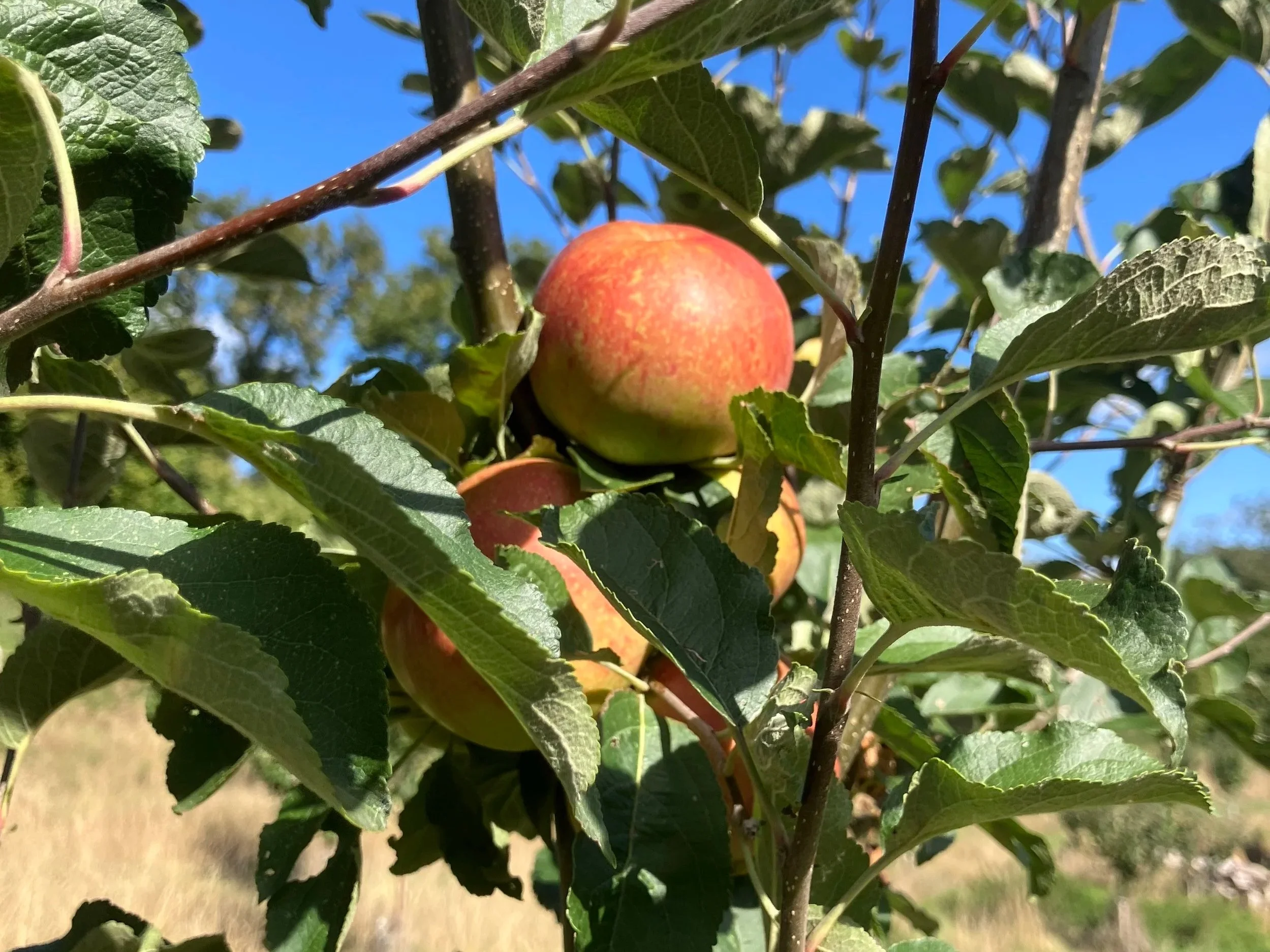
Cox’s Orange Pippin (Dwarf)
Probably the most eaten apple there is. A very tasty apple, and self-pollinating, but can be prone to disease.
Pollination Group 3 (mid), crops October.
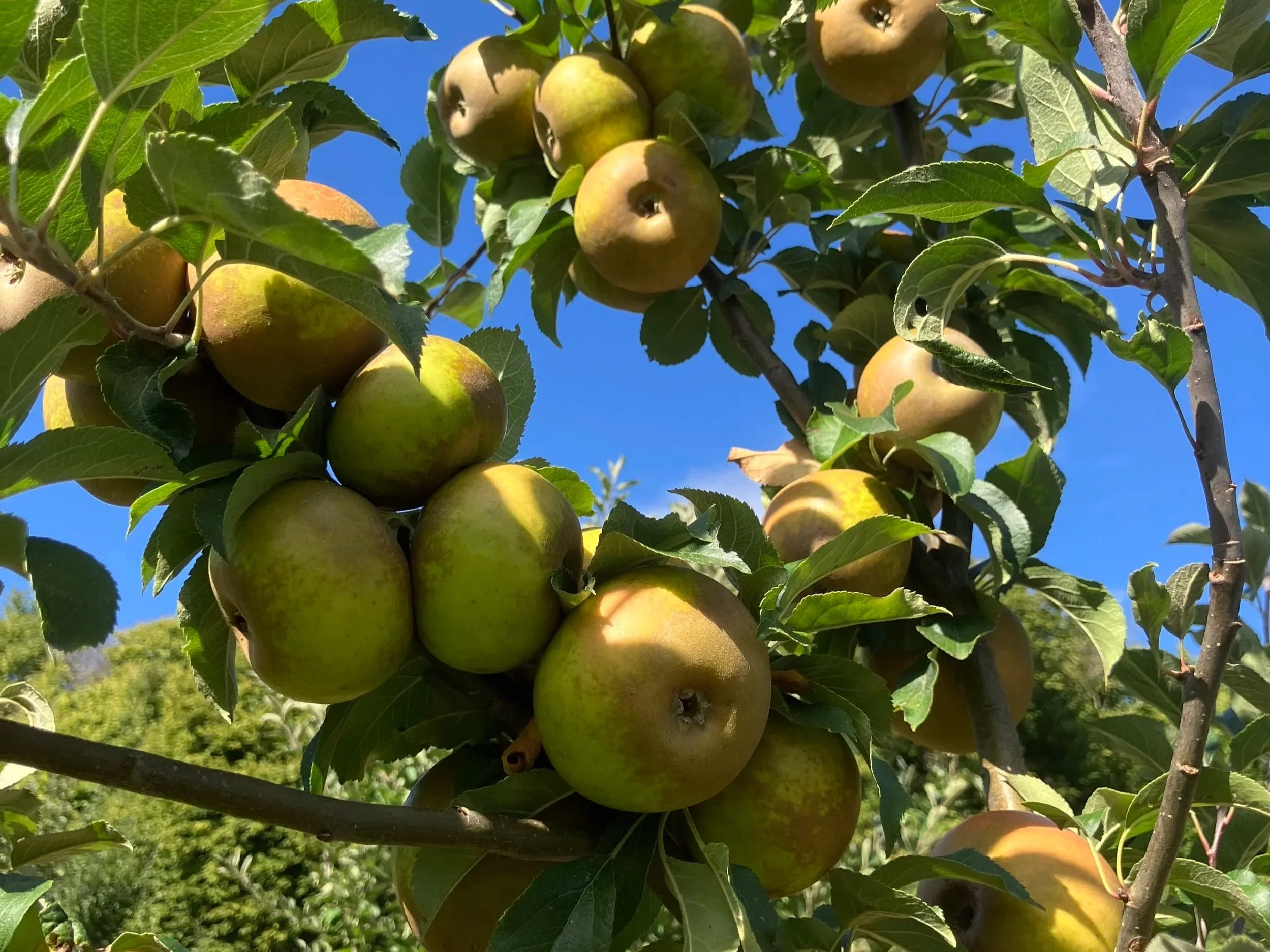
Domestica ‘Gloster’ (Dwarf)
An interesting, late season German Desert apple. Deep red skin and green white flesh. Can be used to cook with.
Pollination Group 3 (mid), crops October, abundant cropper.
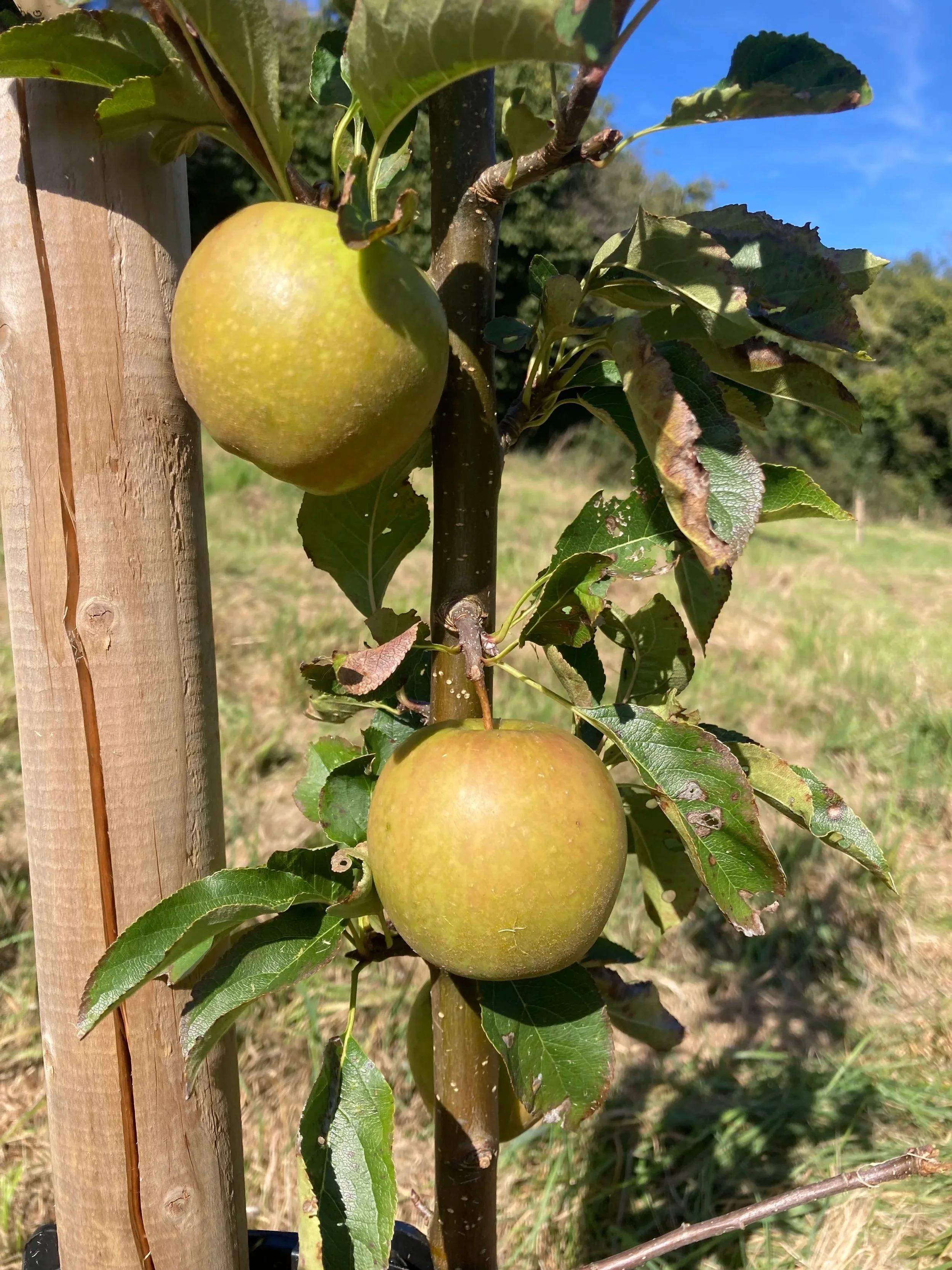
Laxton’s Superb (Dwarf)
A very tasty eater, commercially grown in Europe and originating in Bedfordshire. A very ‘apply’ taste with delicious, crisp flavour. Stores well.
Pollination group 4 (late), crops October, stores into January.
IMAGE COMING SOON
Sunset (Large or Dwarf)
A very popular eater, similar in flavour and appearance to Cox’s Orange Pippin but hardier.
Pollination Group 3 (mid), crops September, small fruit.
Blenheim Orange (Large or Dwarf)
Dual use but best known as a cooker. Oxforshire variety, dating back to 1840. Pretty pink tinged fruits make this an attractive addition to any orchard.
Pollination Group 4 (very late), crops October, will store all Winter.
IMAGE COMING SOON
IMAGE COMING SOON
Cornish Aromatic (Dwarf)
Sweet but with a slight ‘kick’ of sharpness. Crunchy and delicious.
Pollination Group 3 (mid), crops October, white flesh, russeted skin.
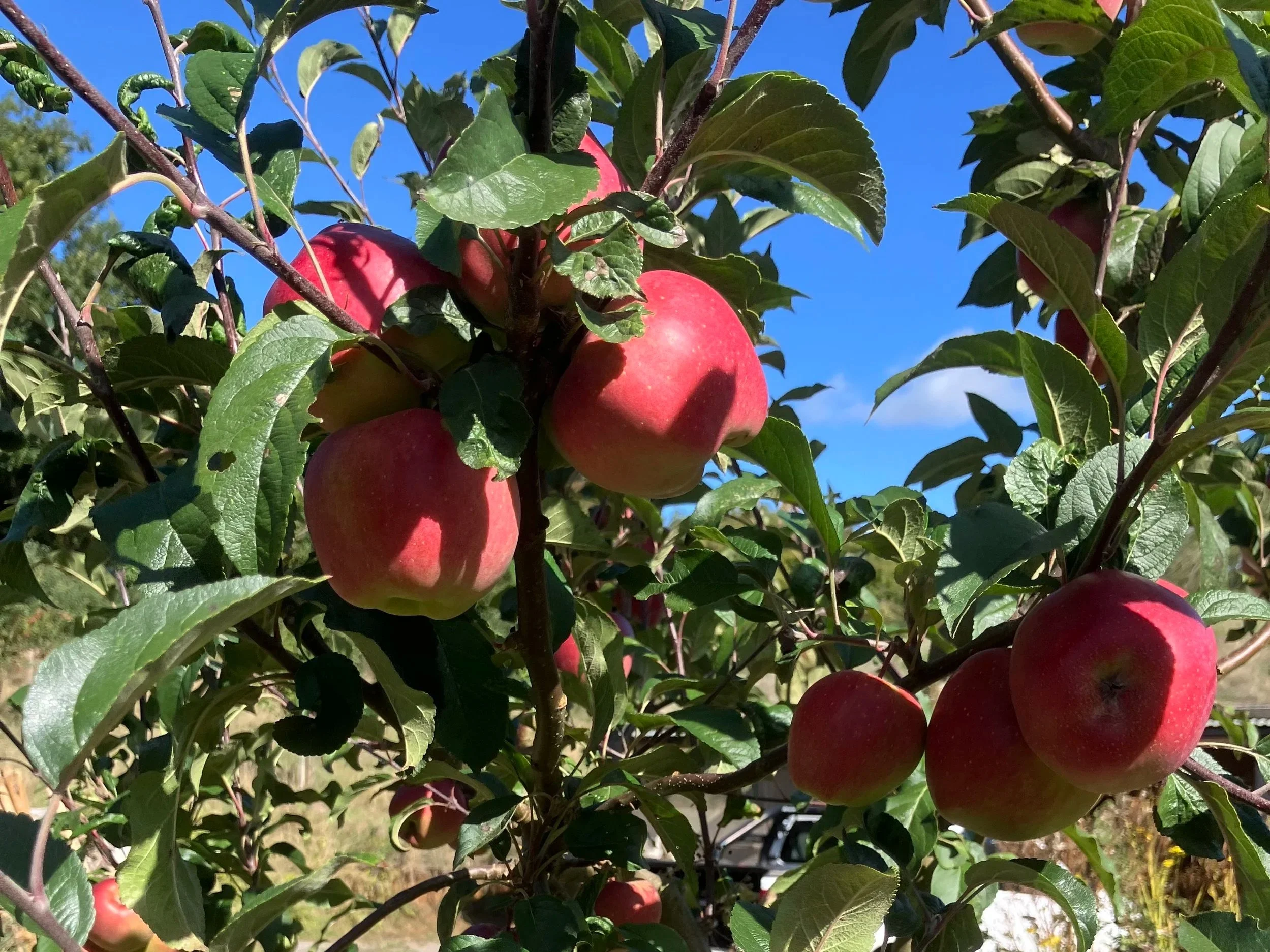
Egremont Russet (Dwarf)
Probably the most eaten Russett there is. Delicious, even if it is from Sussex! Stores well.
Pollination Group 3 (mid), crops October, unsurprisingly Russetty!
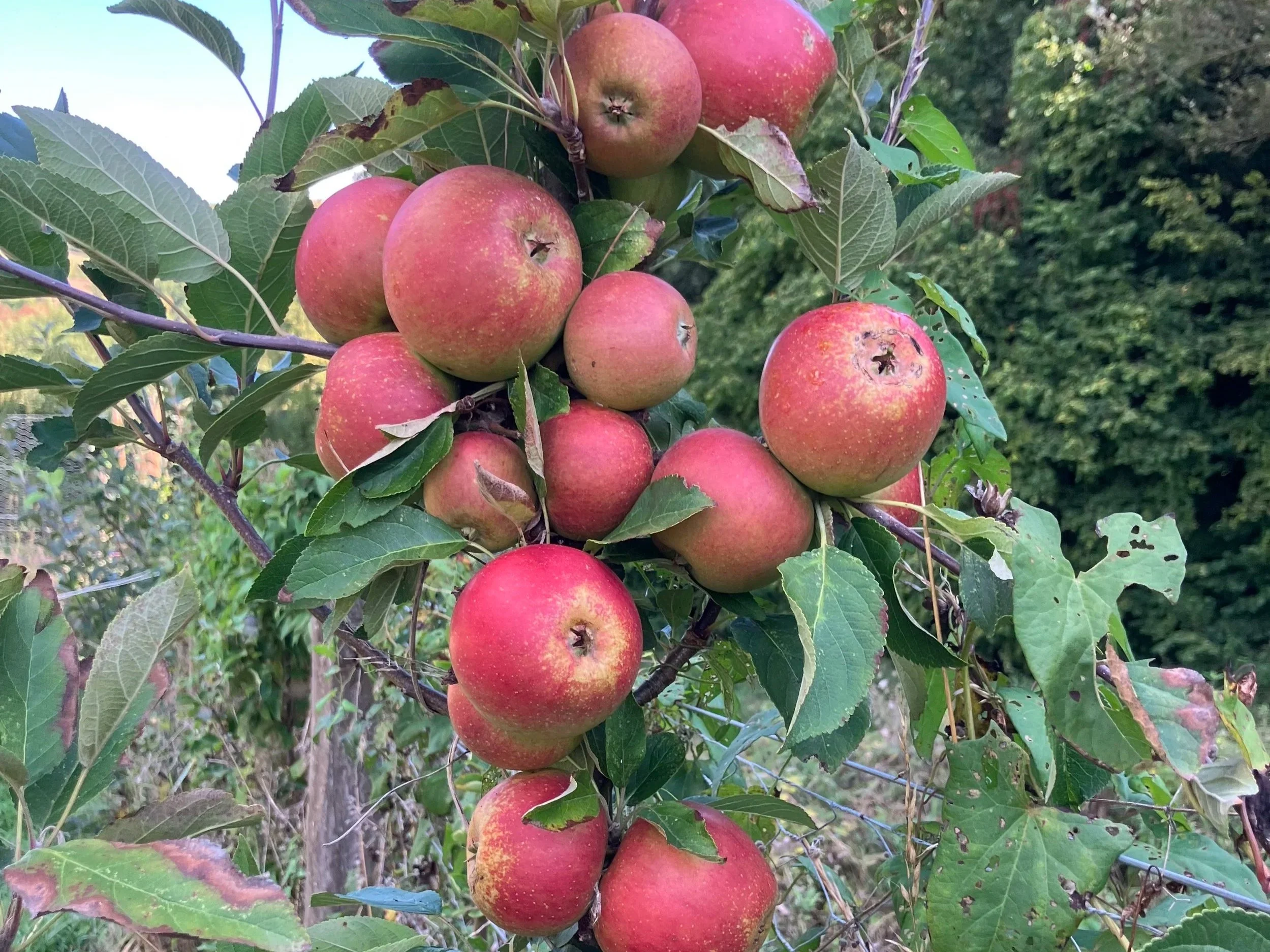
Lord Lambourne (Large or Dwarf)
A delicious, and hardy sweet desert apple. Resistant to disease with a crisp ‘apply’ flavour. Originating in Bedfordshire.
Pollination group 2 (early), crops September, stores until November.
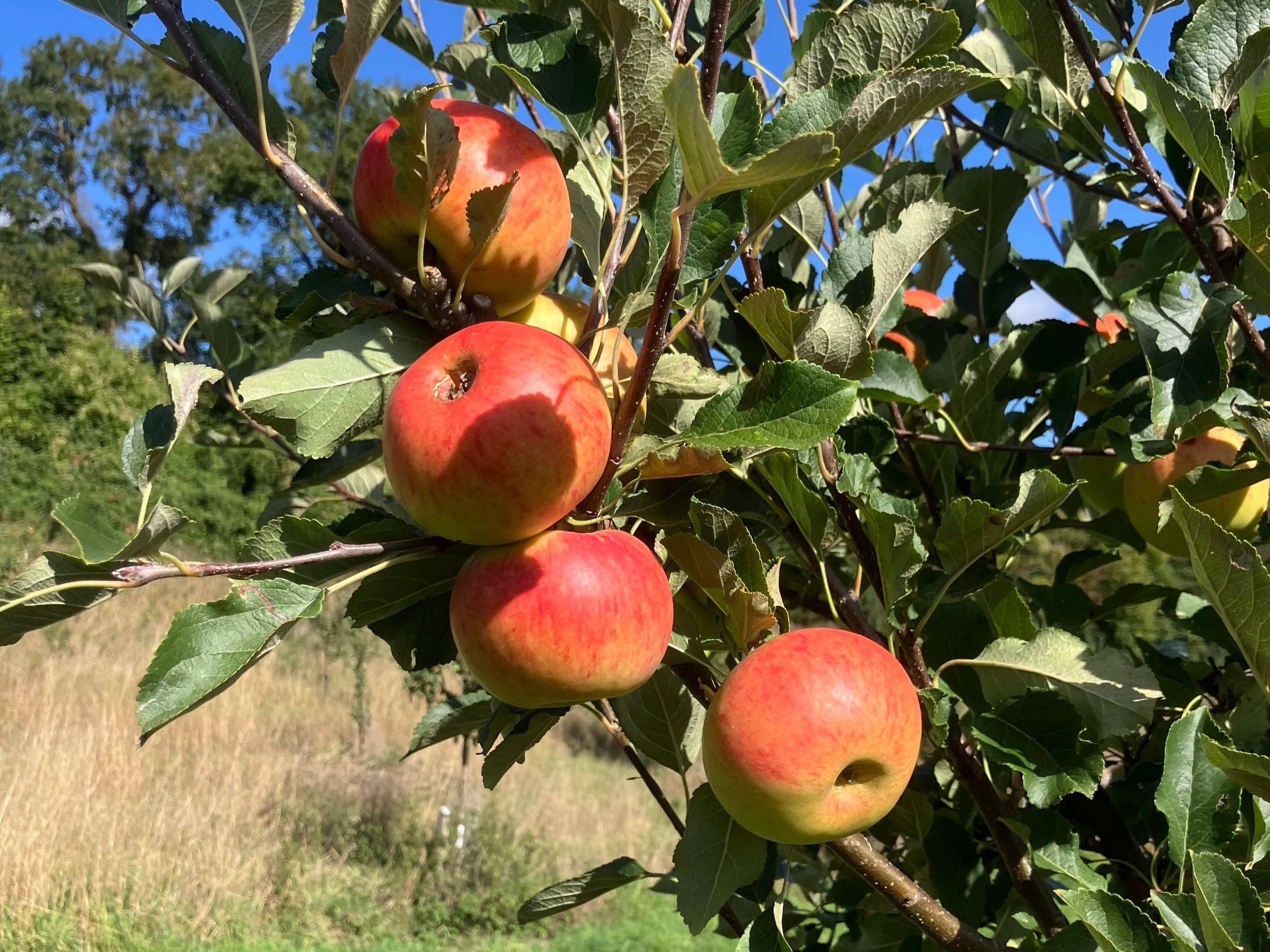
Discovery (Large or Dwarf)
Excellent early season eater, pretty pink colour, delicious flavour.
Pollination Group 3 (mid), stores quite well.
IMAGE COMING SOON
Katy (Large or Dwarf)
A justifiably famous and very popular eater that is also used to make ‘rose’ style ciders. Juicy, delicious and strikingly beautiful with its blood red skin straight out of a classic Disney film!
Pollination Group 2 (early), crops early September.
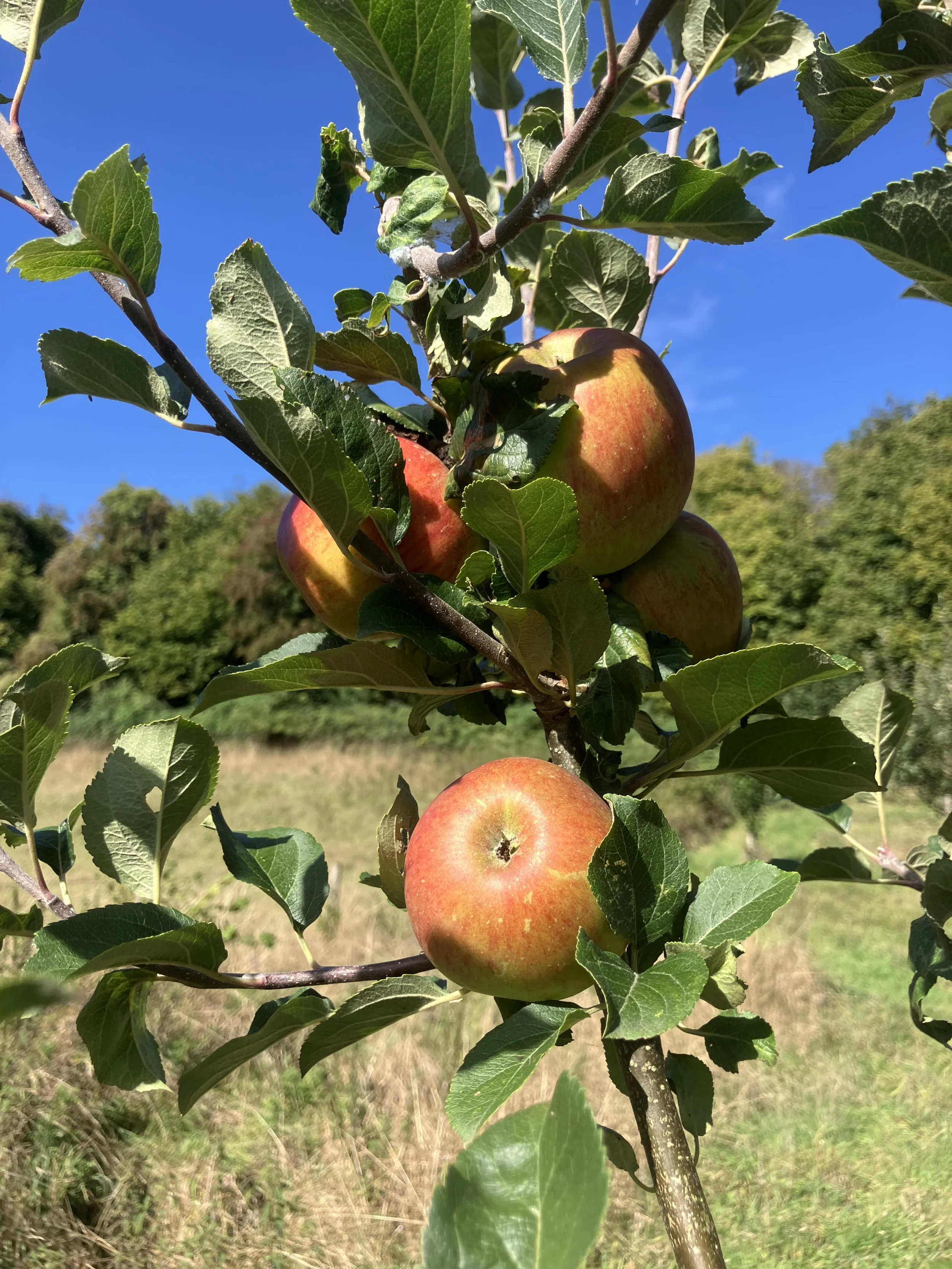
‘Kingsdon Codling’ (Large or Dwarf)
A ‘pippin’ picked out of a hedge in Somerset and named by us. A unique tree you can only get from us.
Pollination Group 3 (mid), crops early and the crisp delicious apples can stay on the tree until well past Christmas.
IMAGE COMING SOON
Pitmaston Pineapple (Large)
An old Herefordshire variety very popular with Victorians for its unique ‘pineapply’ taste. The smaller habit of these trees makes them ideal for the garden.
Pollination group 3 (late), crops September, stores until November.
Spartan (Dwarf)
A striking, deep red / purple eating apple, originating in the U.S. and very popular in the UK. Delicious, sweet and juicy with creamy white flesh.
Pollination group 3, Crops October, stores until January.
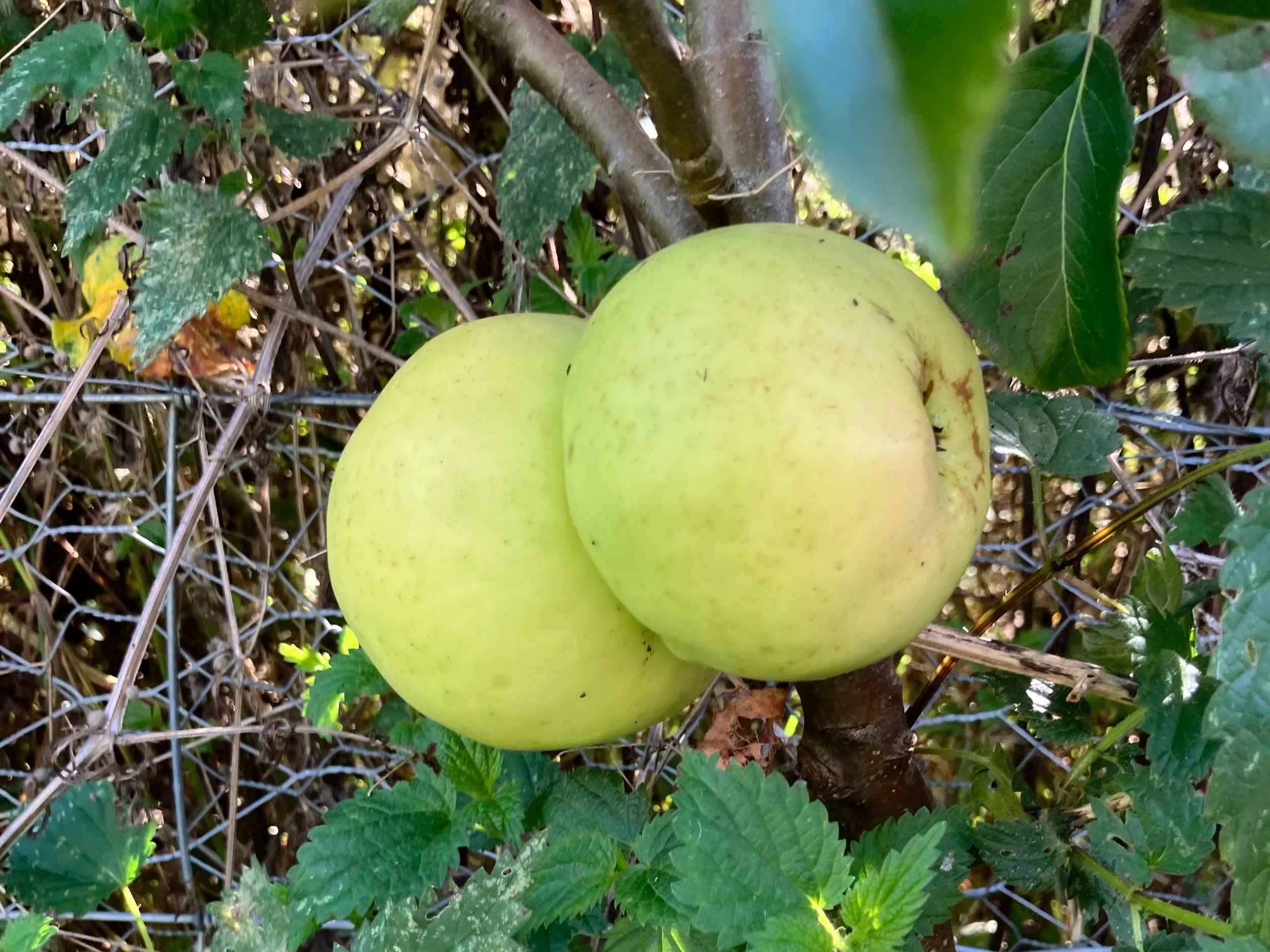
Arthur Turner (Large)
Striking and vintage cooker originating from Slough in the early 20th Century. Golden skin with a pretty red blush. Famously sweet, making it an excellent choice for deserts.
Pollination Group 2 (early), crops September, will store.
IMAGE COMING SOON
English Codling (Large)
Remarkable, distinctive and very old cooker with unusually shaped almost ‘petite pan’ shaped deep green apples. One of our oldest varieties.
Pollination Group 2 (early), crops October, will store.
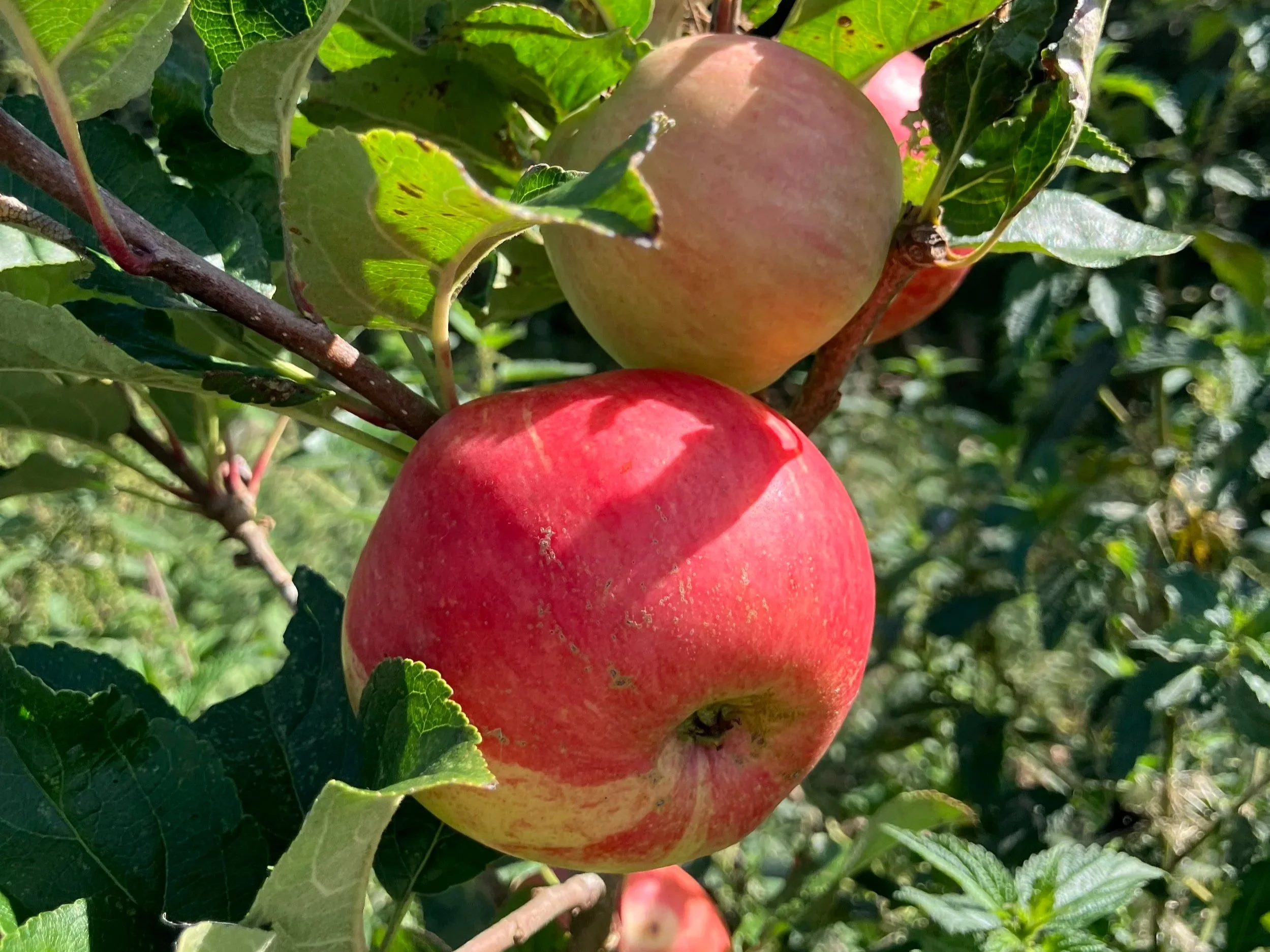
Bardsey Island (Large)
Discovered on Bardsey Island in North Wales in 1998, a very disease resistant and hardy variety that makes it an excellent choice for the organic grower. Duel use as a cooker and eater. Pollination Group 2 (early), harvest October.
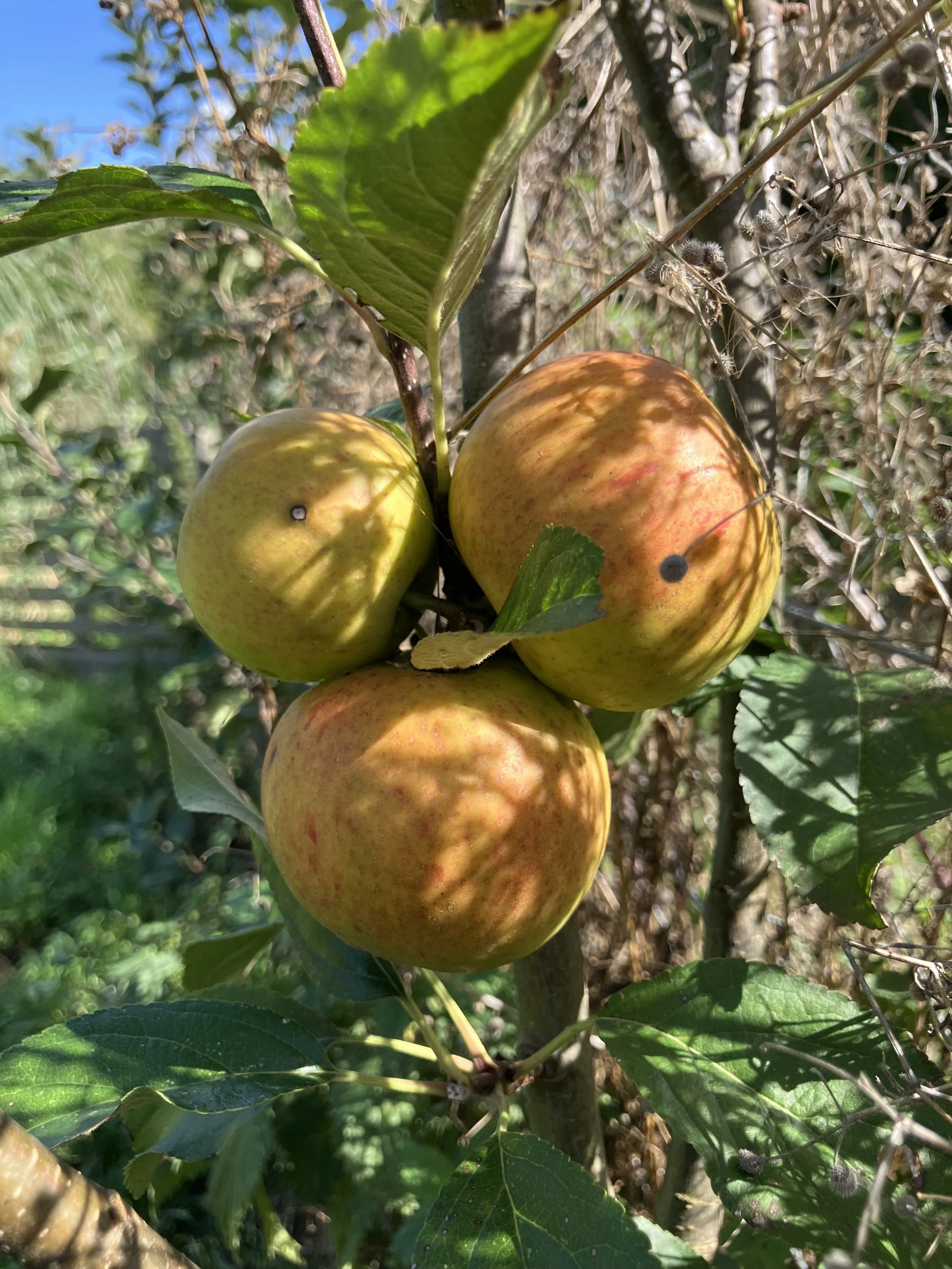
Court of Wick (Large or Dwarf)
A spectacular, very old Somerset variety (late 18th Century). Golden yellow skin with a freckly red russet. Excellent disease resistance makes it a good choice for organic growers.
Pollination Group 4 (very late), crops from September.
IMAGE COMING SOON
Cooking apples
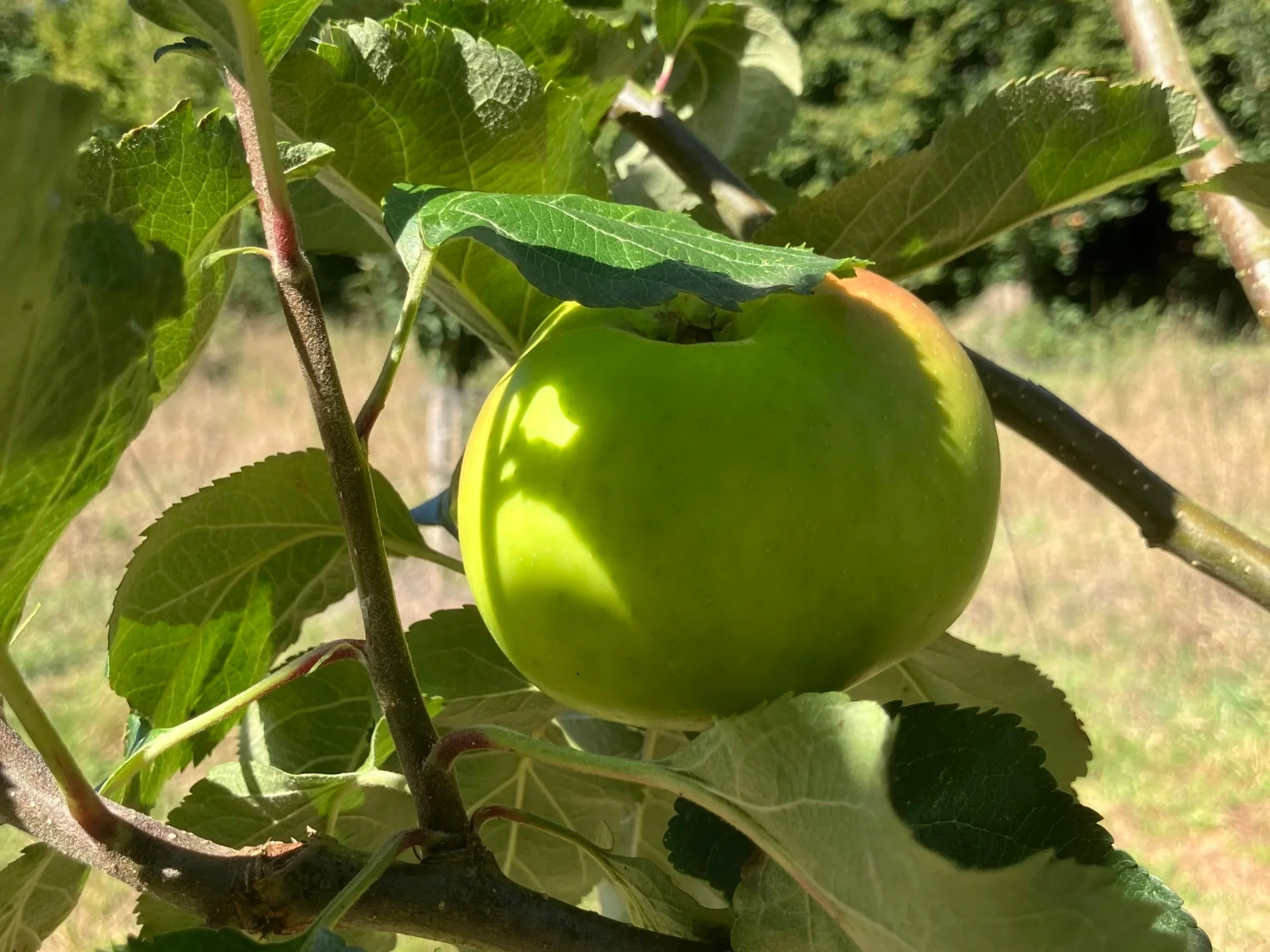
Bramley (Dwarf)
Needs no introduction. Probably the best cooker there is! Light green skin, large apples and crisp bitey flesh that makes the perfect apple pie!
Pollination Group 3 (mid), crops October, sadly from Nottinghamshire!
Gloria Mundi (Large)
A cooker that produces massive apples! Propagated from stock kindly donated from an orchard in mid-Somerset.
Pollination Group 4 (late), crops late, supposedly the biggest apple grown in North America, from where it originates.
IMAGE COMING SOON

Cider apples
Sweet and bitter sweet
Many of these ‘sweet’ (S) and ‘bitter-sweet’ (BS) cider apples also make excellent and interesting eaters.
Sharp and bitter sharp
These sharp (SH) and ‘bitter-sharp’ (BSH) apples are too sharp for most to eat, but are essential to make a proper cider.
Sweet (‘S’) and bitter sweet (‘BS’)
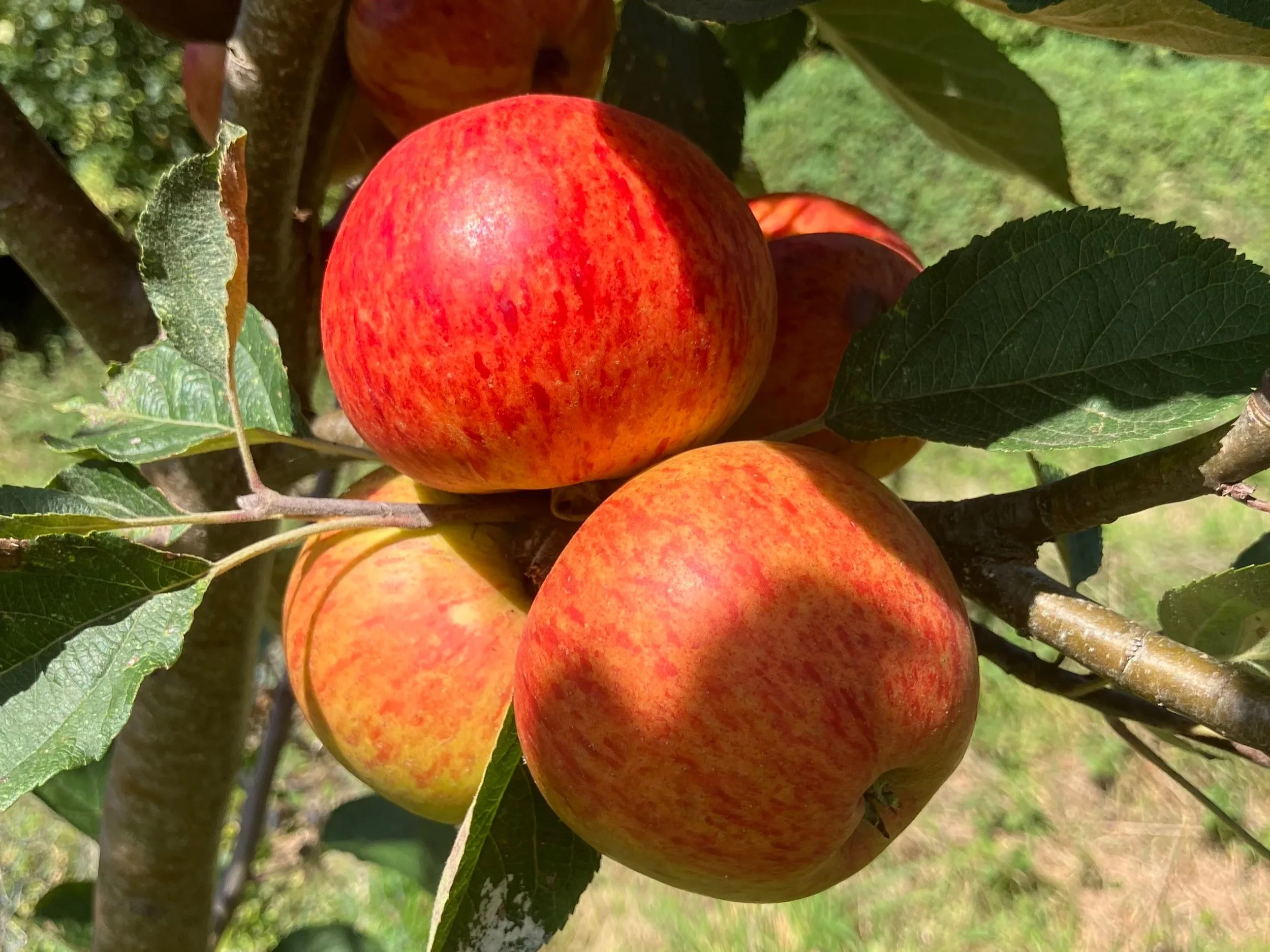
Ashton Bitter (BS) (Large)
A variety from the Bristol Long Ashton Research Society, bred in the 1940s.
Pollination Group 2 (early), harvest September.
Bell Apple / Sweet Sheep’s Nose (S) (Large)
A wonderfully named old Somerset variety so sweet it can also be an eater. Unusually shaped fruit give it a unique ‘Somersety’ style.
Pollination Group 2 (early), harvest October.
IMAGE COMING SOON
Brown Snout (BS) (Large)
A Hereford variety, not the handsomest - but who is?
Pollination Group 4 (late), harvest late November.
Chisel Jersey (BS) (Large)
An old Somerset variety, taken from Martock in mid-Somerset’.
Very late blossom (group 5), good for frost pockets, harvest November.
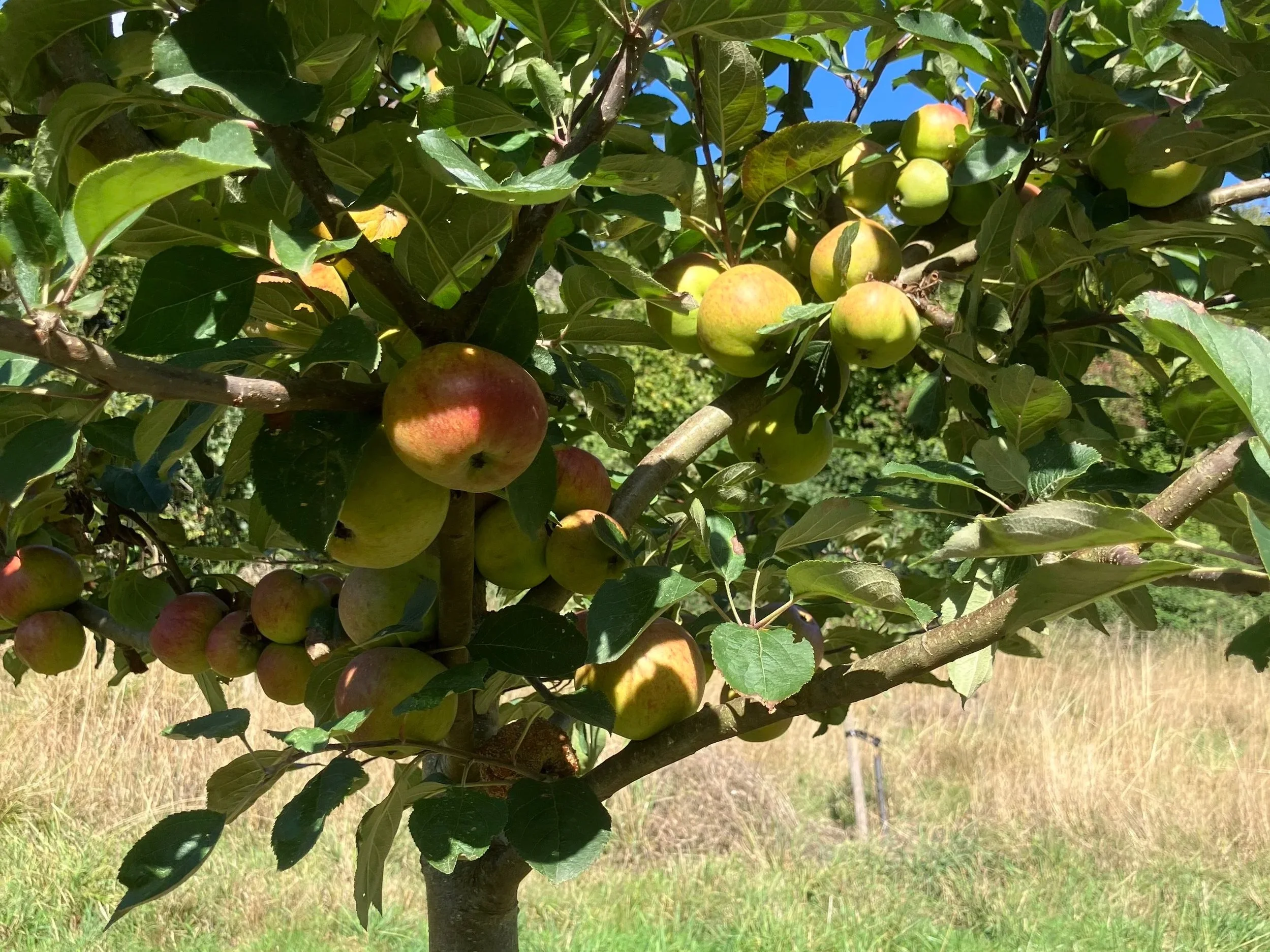
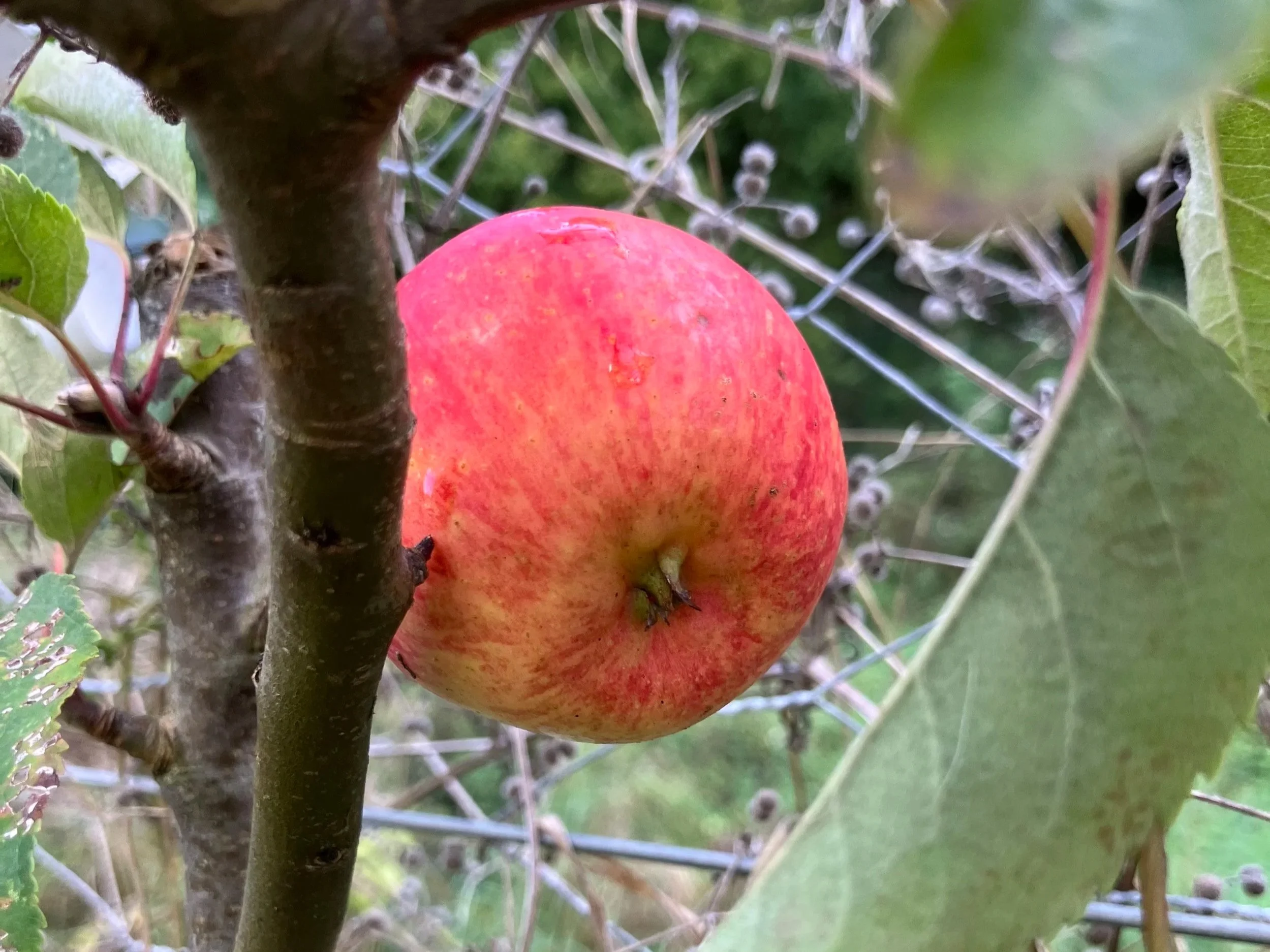
Frome River (BS) (Large)
An excellent juicer with a pretty, slightly pink colour. Originating from Dorset, not Frome!
Pollination Group 2 (early), harvest September.
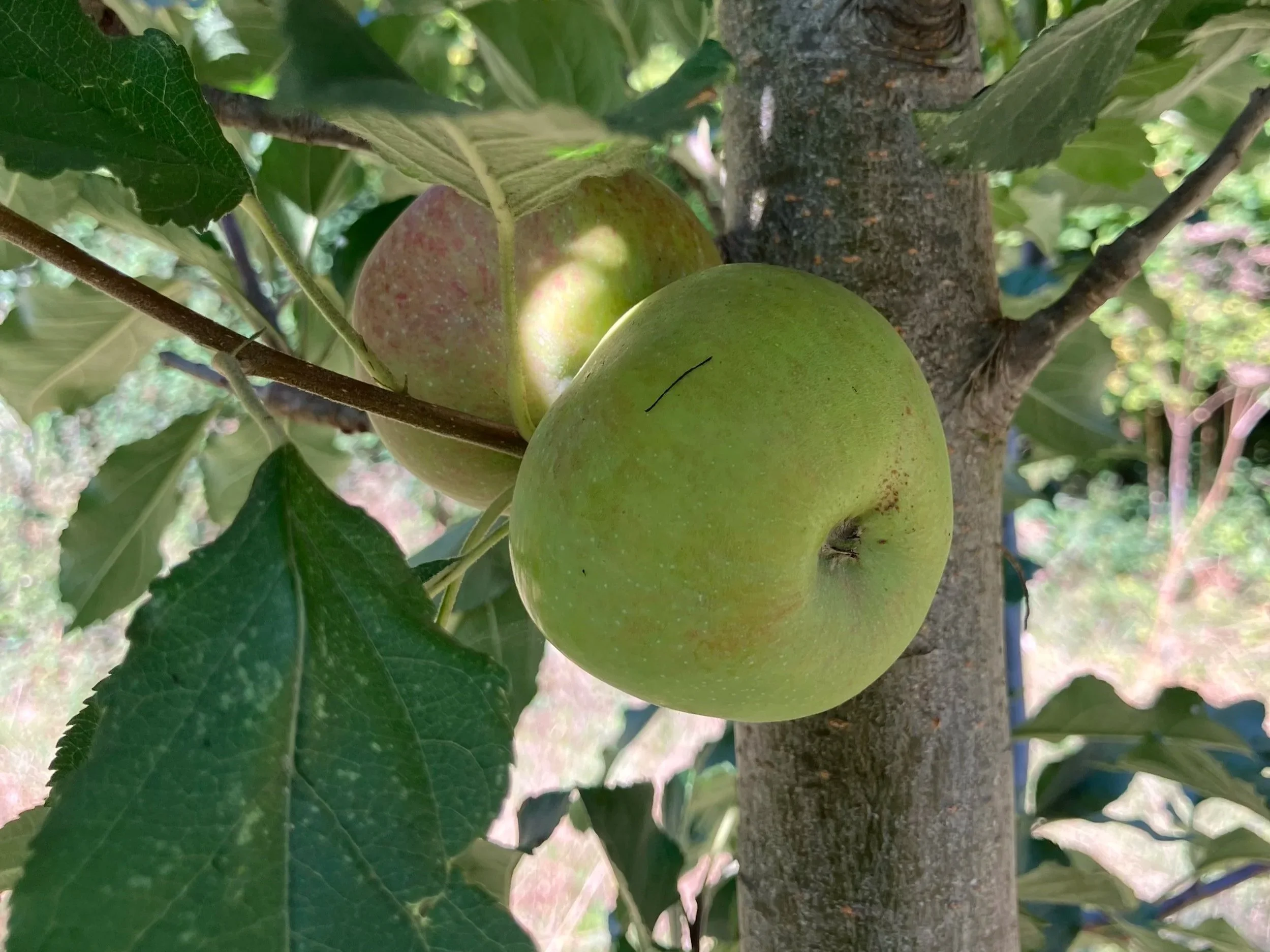
Dabinett (BS) (Large)
A personal favourite. A tasty eating apple widely used for cider. Apples turn red in the right conditions and better still, it’s from Kingsbury Episcopi - the home of Burrow Hill cider!
Pollination Group 3 (mid), harvest November.
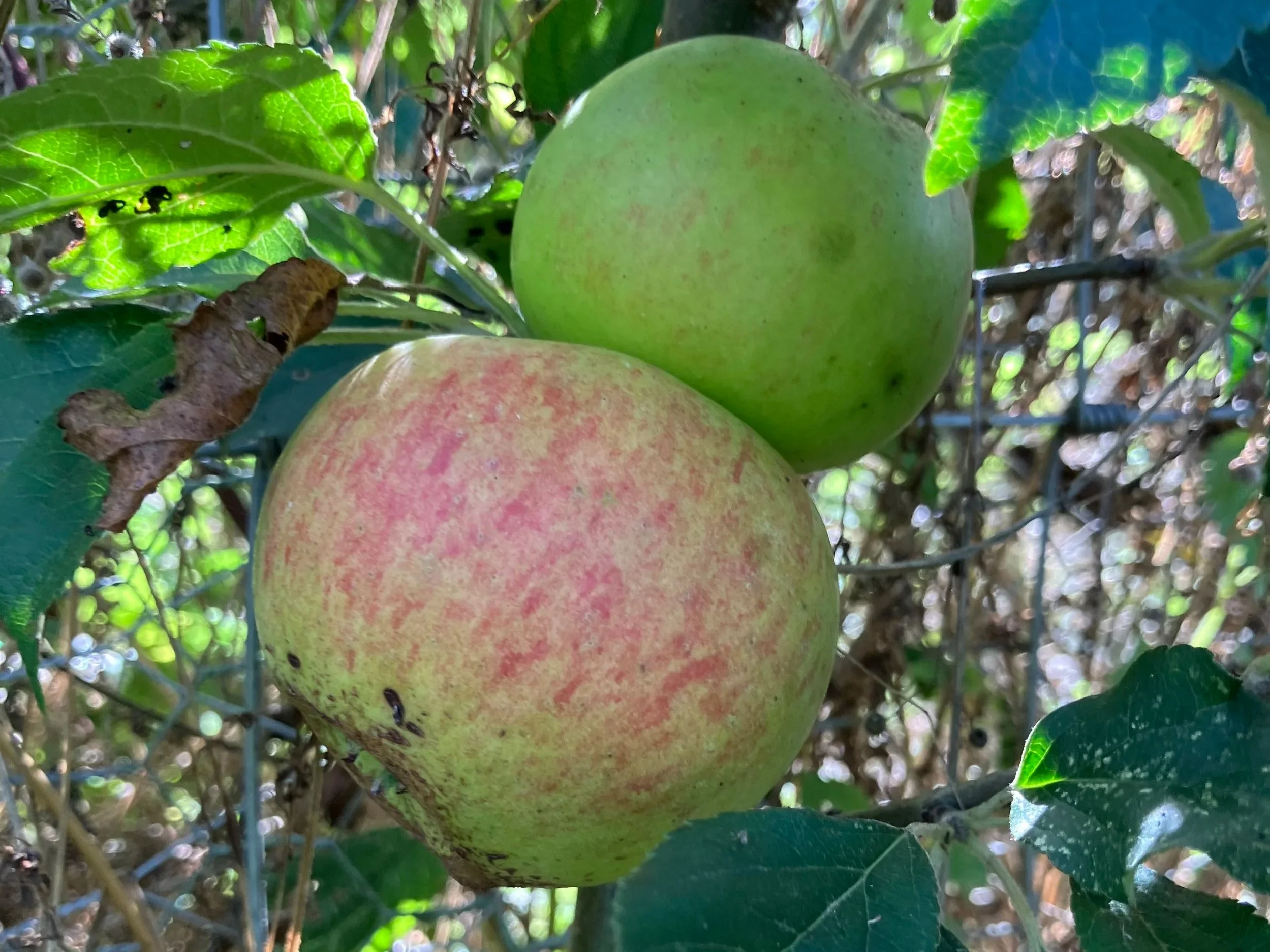
Fillabarrel (BS) (Large)
Another fantastically named old South East Somerset variety.
Pollination Group 2 (early), harvest October.
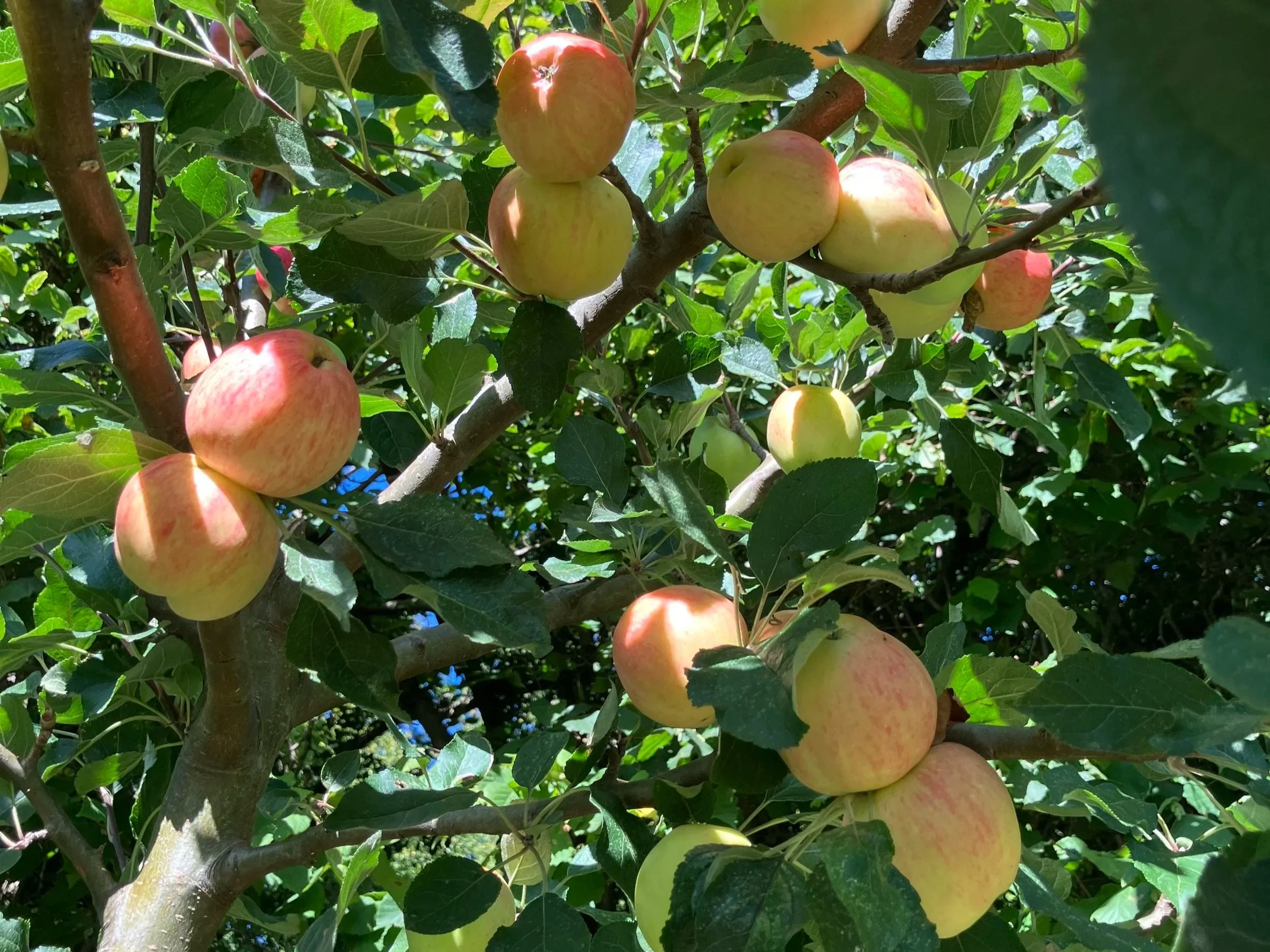
Major (BS) (Large)
Another old Somerset variety, which harvests early and crops well.
Mid-season blossom (Group 3), harvests early in September.
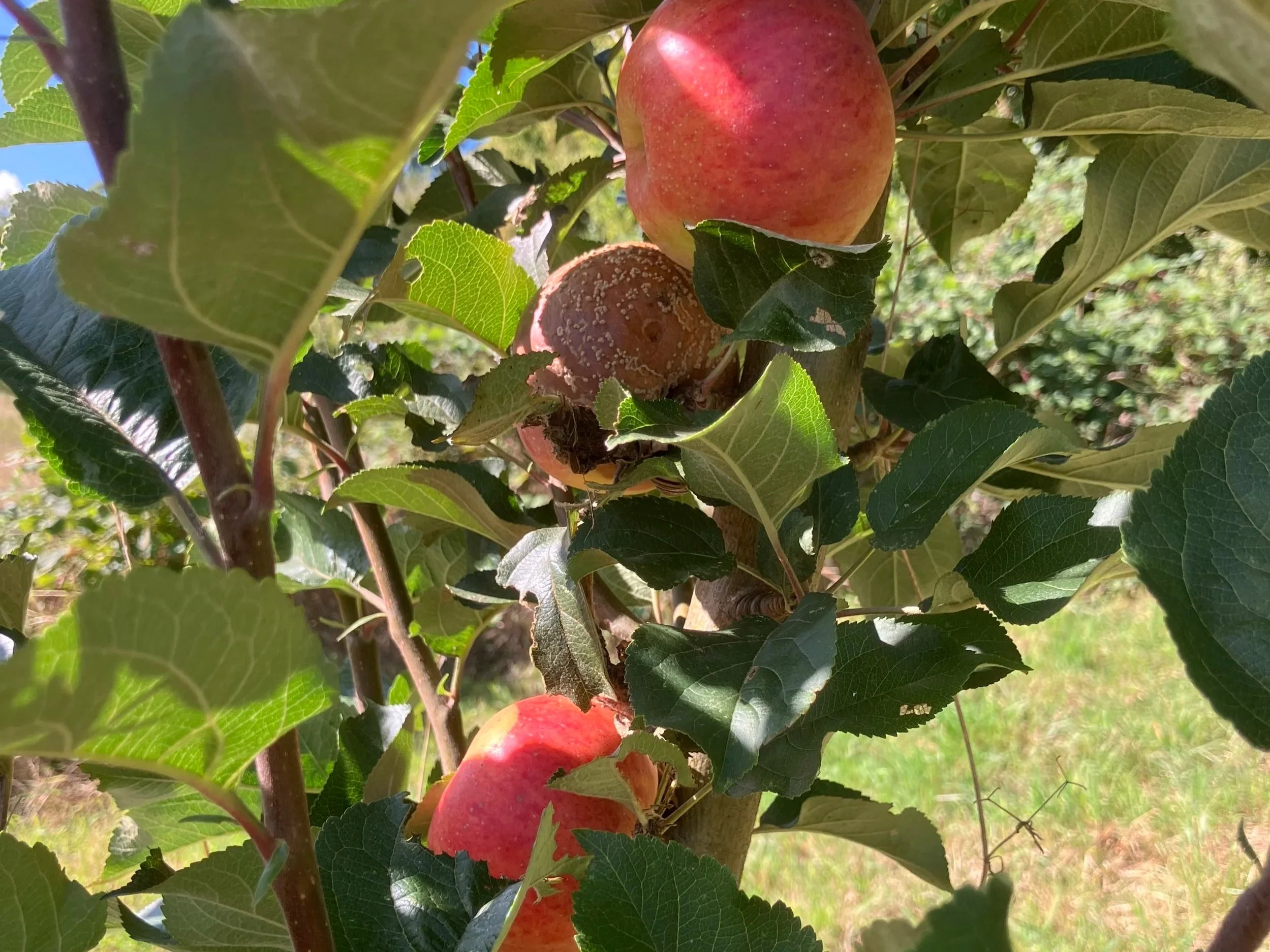
Dunkerton Late Sweet (S) (Large)
Not actually from Dunkerton, unfortunately, but at least from Somerset (near Glastonbury). A delicous, crisp apple that matures later and is a good eater as well as juicer / cider variety.
Pollination Group 4 (late), harvest late November.
IMAGE COMING SOON
Hangy Down (BS) (Large)
What a name! A classic cider variety, cropping heavily on distinctive ‘twiggy’ branches, which give it its ‘droopy’ characteristics. An essential, if only as a talking point!
Pollination Group 4 (late), harvest October.
Michelin (BS) (Large)
A French one!? So widely used and highly regarded that we don’t mind the Frenchness. An excellent, highly regarded and extensively planted variety. Worth including in any orchard.
Pollination Group 3, harvest October
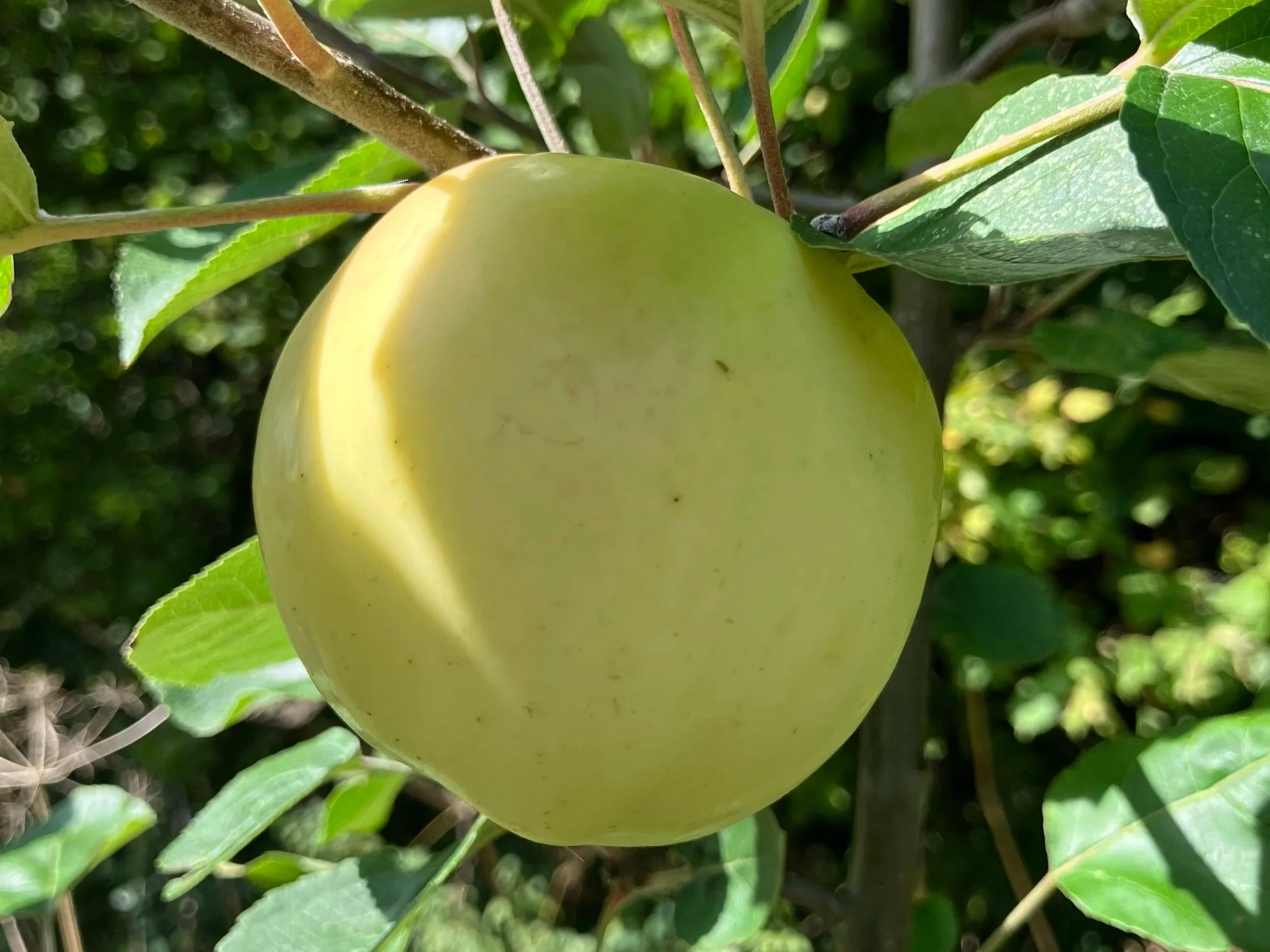
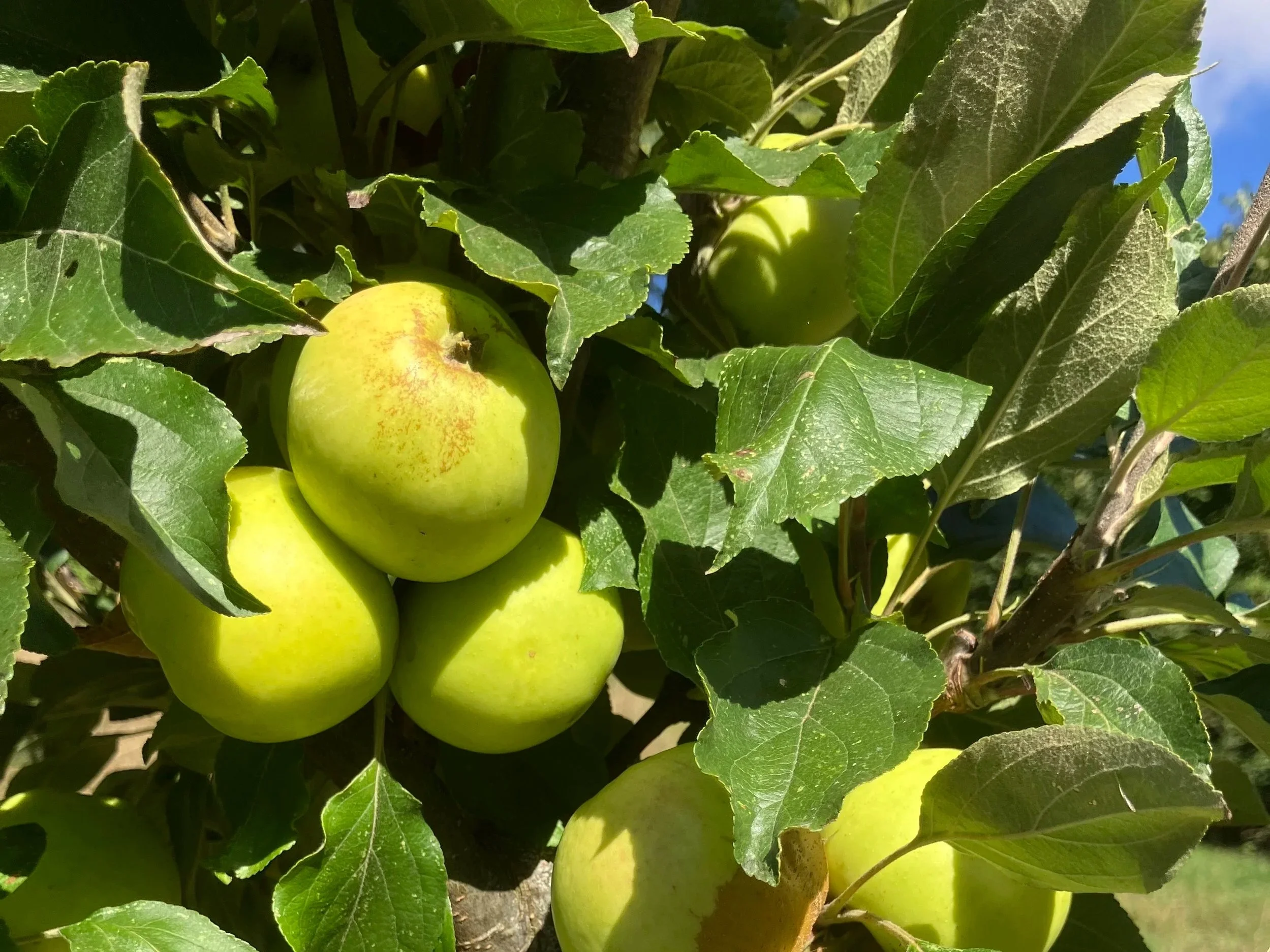
Harry Masters Jersey (BS) (Large)
Originating from Woolston, Somerset. A popular cider variety also known as Port Wine to all the crusty Glastos!
Pollination Group 4 (late), harvest late November.
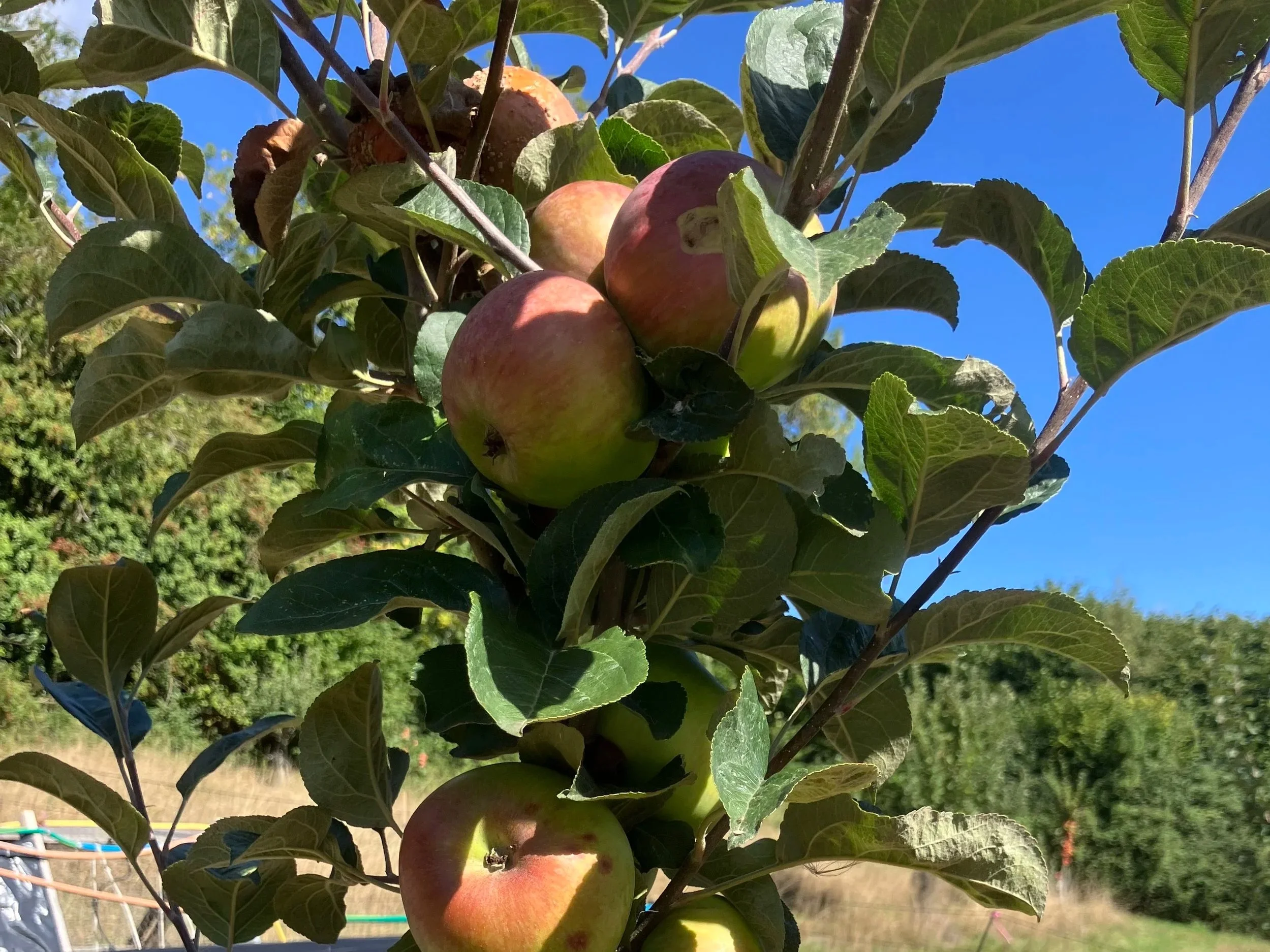
Slack Ma Girdle (S) (Large)
Our favourite named tree, that makes one of our favourite tasting ciders, and apples. Sadly from Devon.
Pollination Group 2, harvest November.
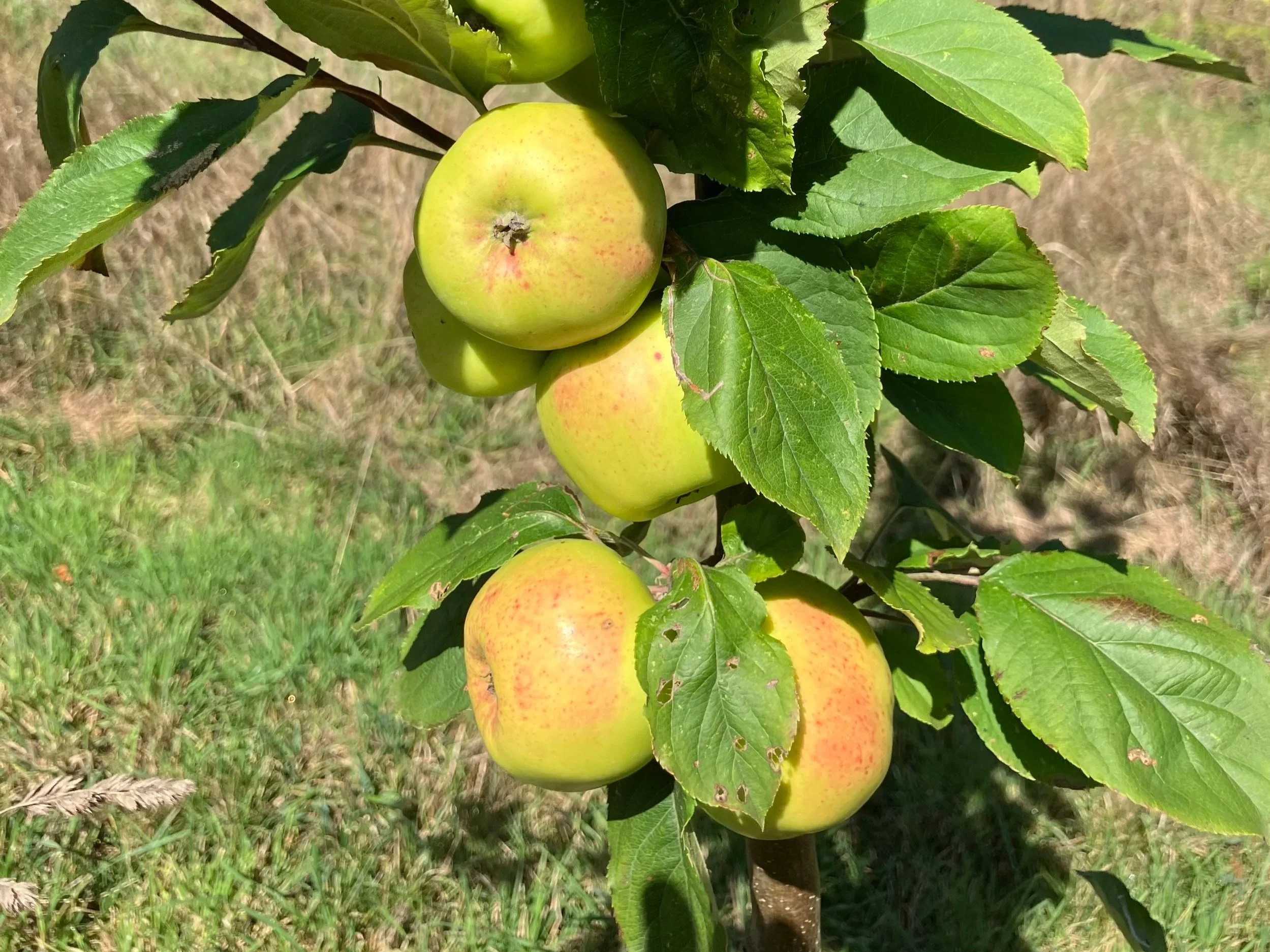
Somerset Redstreak (BS) (Large)
What a name! A traditional variety that is resistant to diseases and originated in the Lambrook area of Somerset.
Pollination Group 2 (early), harvest October.
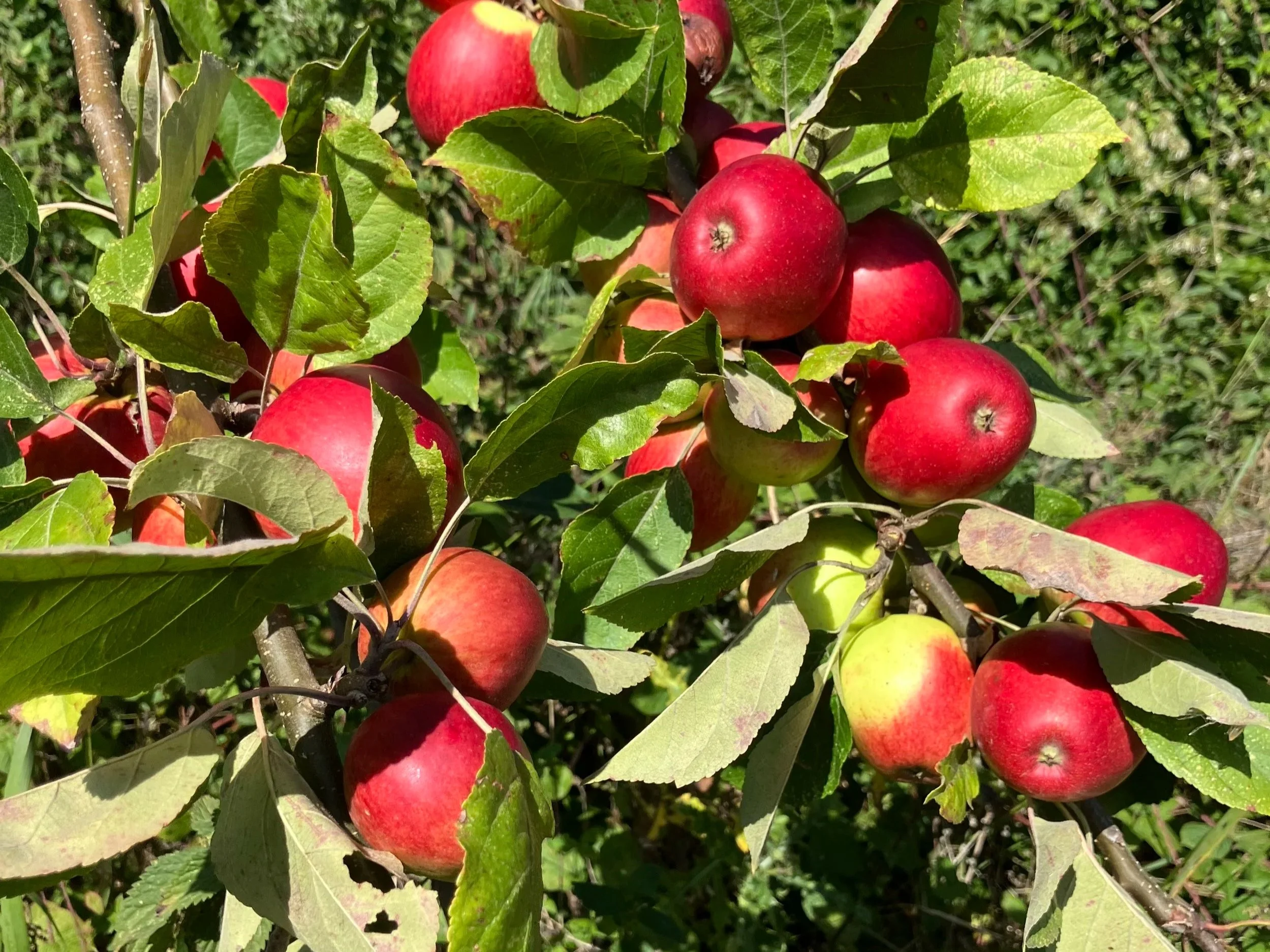
Tremlett’s Bitter (BS) (Large)
Gorgeous bright red apples make this a pretty tree to look at. A Devon variety once again, but worth it nonetheless!
Pollination Group 2 (early) but blossom is frost tolerant, harvests October.
Sweet Alford (S) (Large)
One of my favourite all round apples even if it is from Devon! A delicious eater, but more normally associated with juicing or cider. I’d recommend it to anyone.
Pollination Group 3 (mid), harvest November.
Yarlington Mill (BS) (Large)
A proper Somerset variety, originating from Yarlington, North Cadbury.
Pollination Group 4 (late), matures October, heavy cropper.
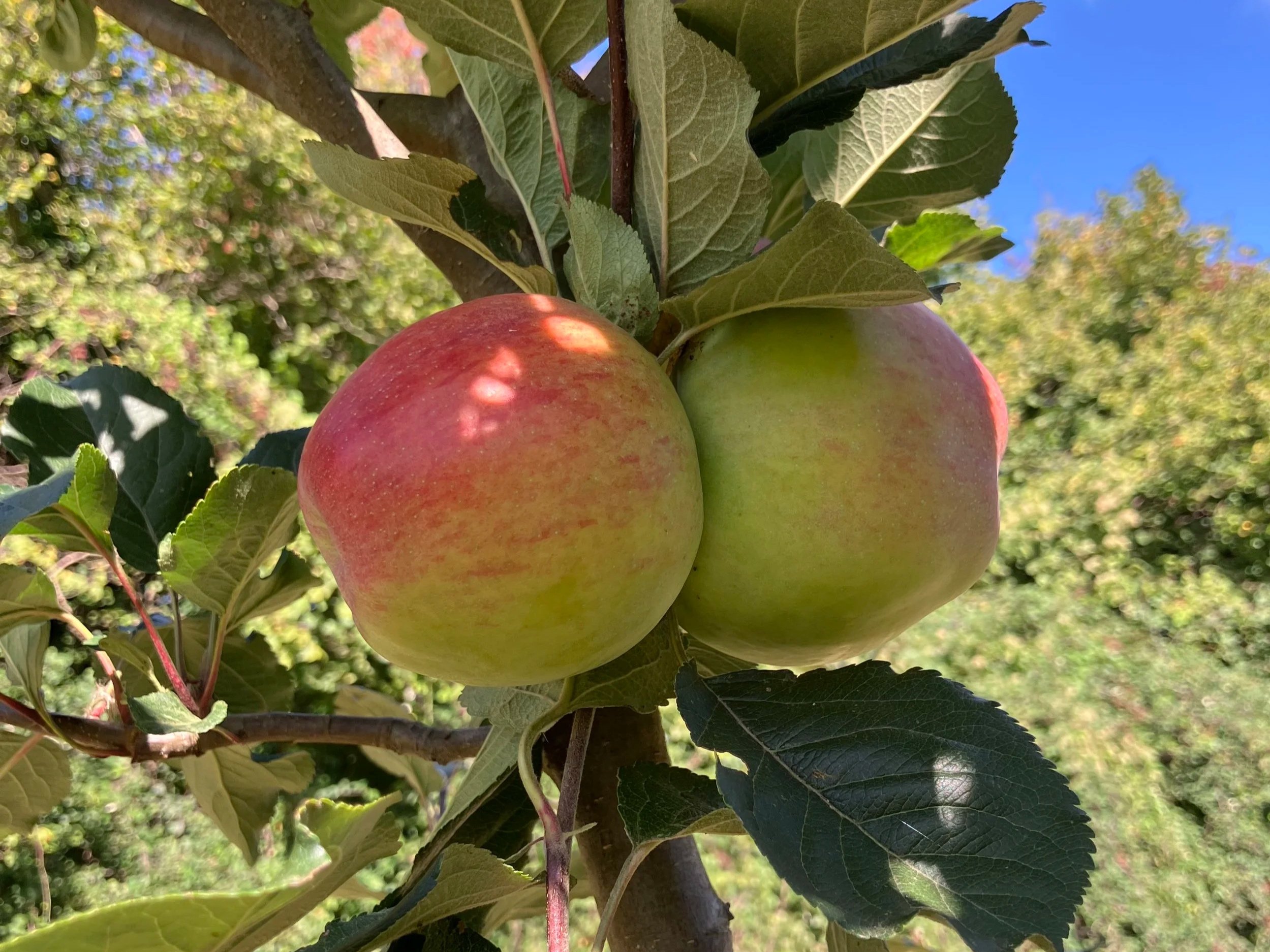
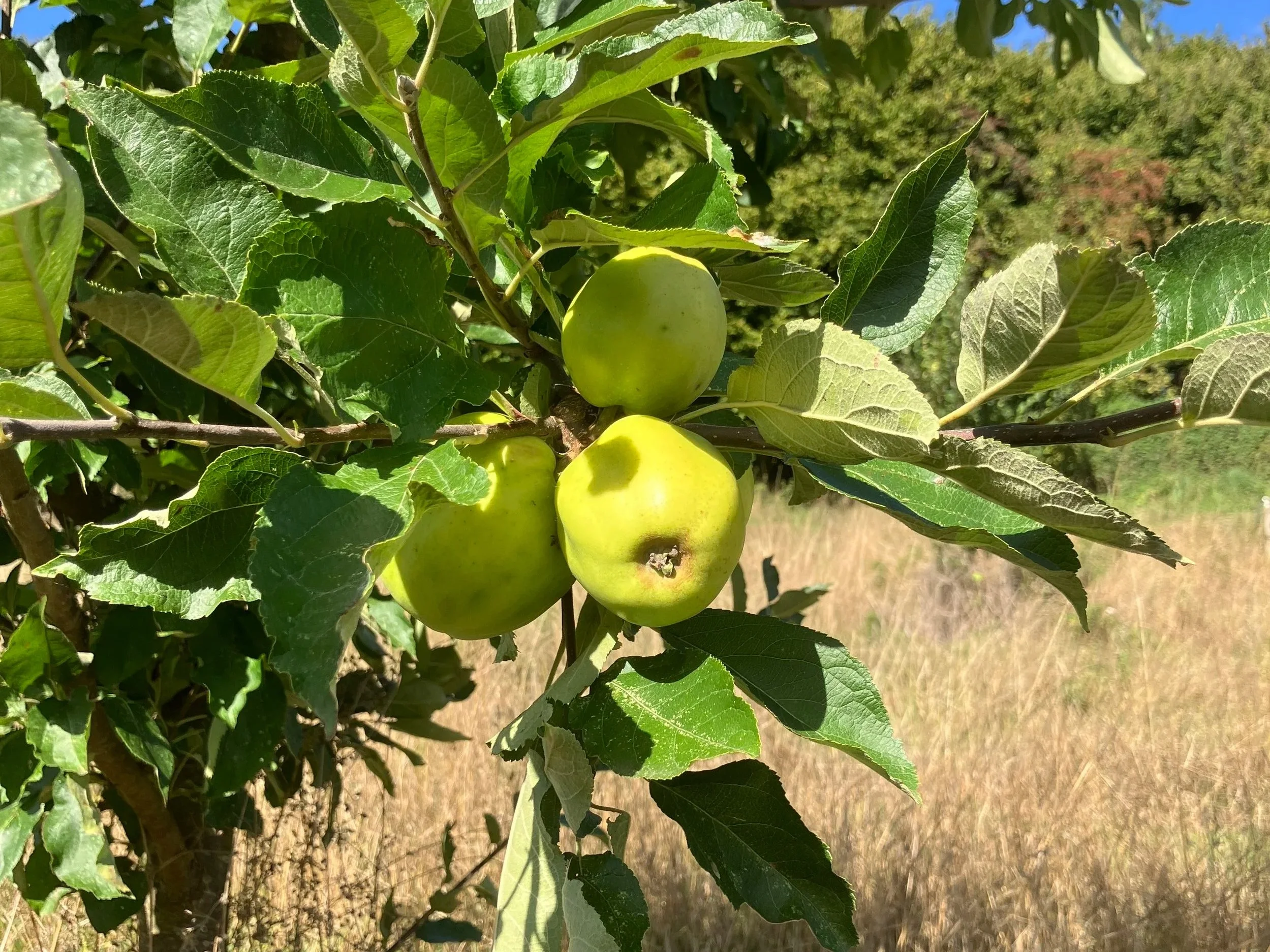
Ashton Brown Jersey (BS) (Large)
Another Long Ashton variety dating back to the early 1900s.
Pollination Group 2 (early), harvest November.
IMAGE COMING SOON
Sweet Coppin (S) (Large)
Another delicous, sweet, Devon apple that is great for juicing and for eating.
Pollination Group 3 (mid), harvest October / November.
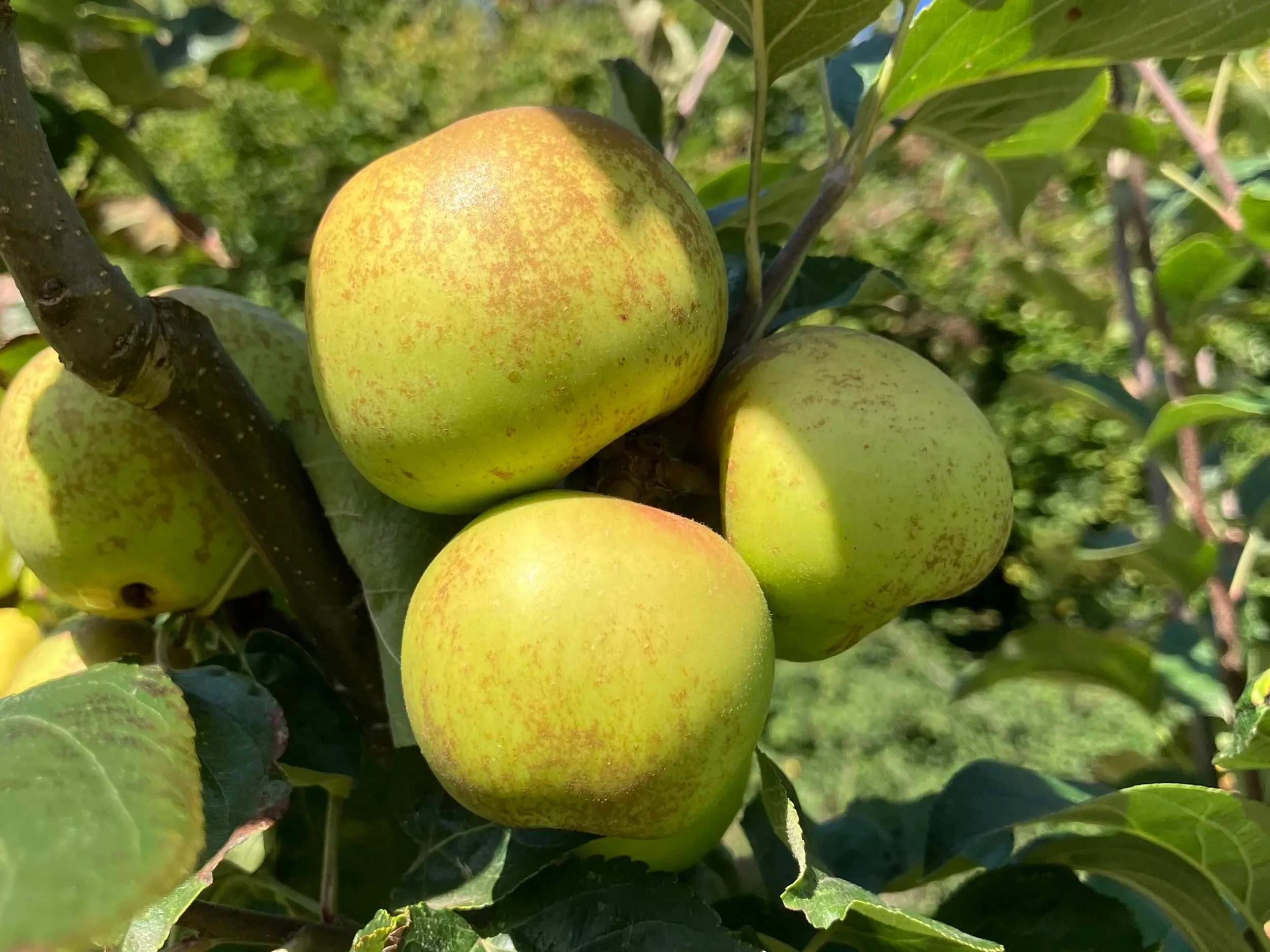
IMAGE COMING SOON
Sharp (‘SH’) and bitter sharp (‘BSH’)
IMAGE COMING SOON
Royal Somerset (SH) (Dwarf)
An interesting old Somerset variety that also makes a good cooker. White / pink skin makes this an unusually pretty looking apple.
Pollination Group 3 (mid), harvest Oct. / Nov.
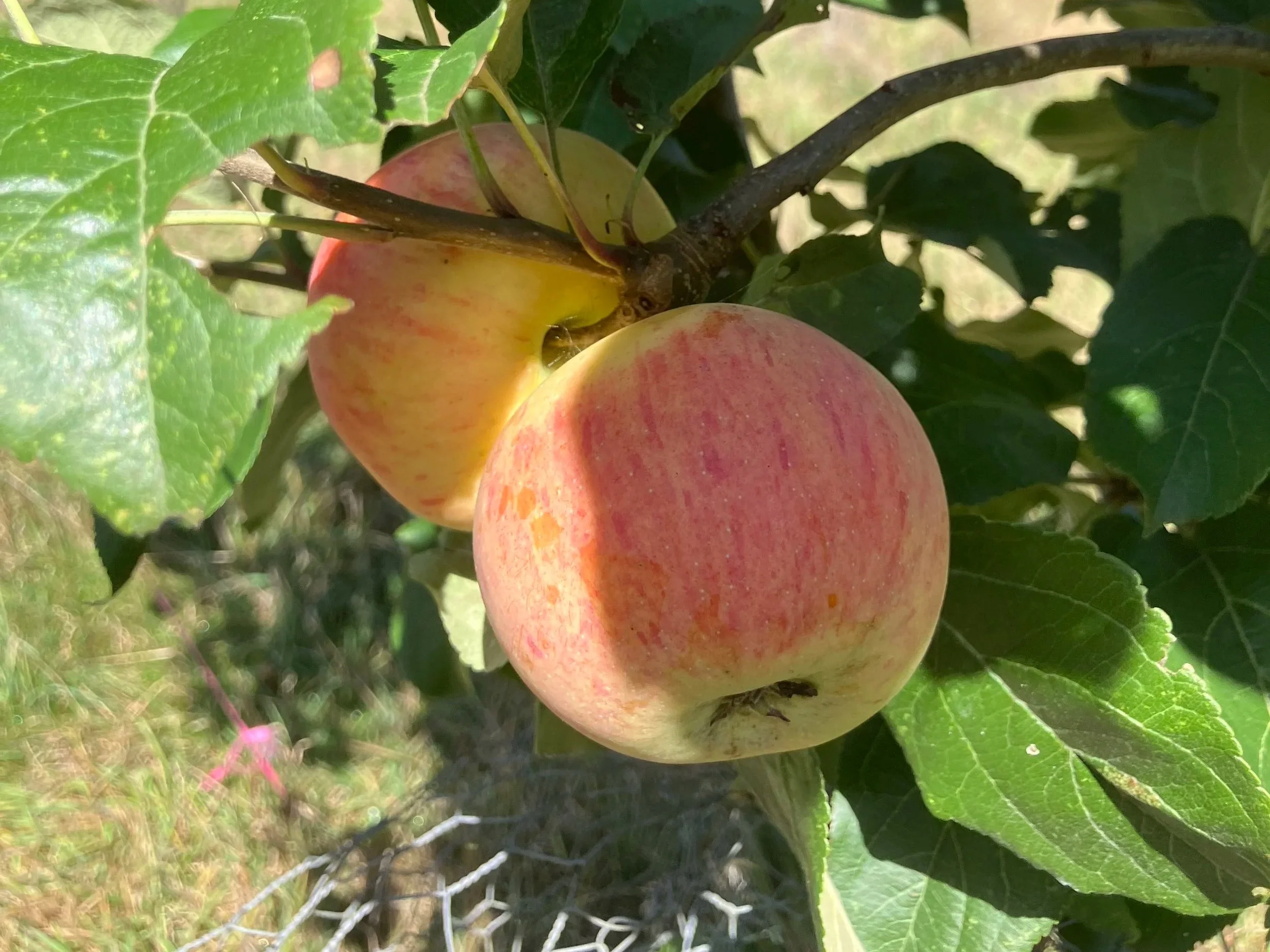
Fair Maiden of Devon (SH) (Large)
Delightfully named and once widely grown throughout Devon. A popular sharp variety useful to add to a blended cider.
Pollination Group 3 (mid), harvest Oct.
IMAGE COMING SOON
Browns (SH) (Large)
Another famous Devon variety, with beautiful red skin and heavy crops.
Pollination Group 3 (mid), harvest Oct.
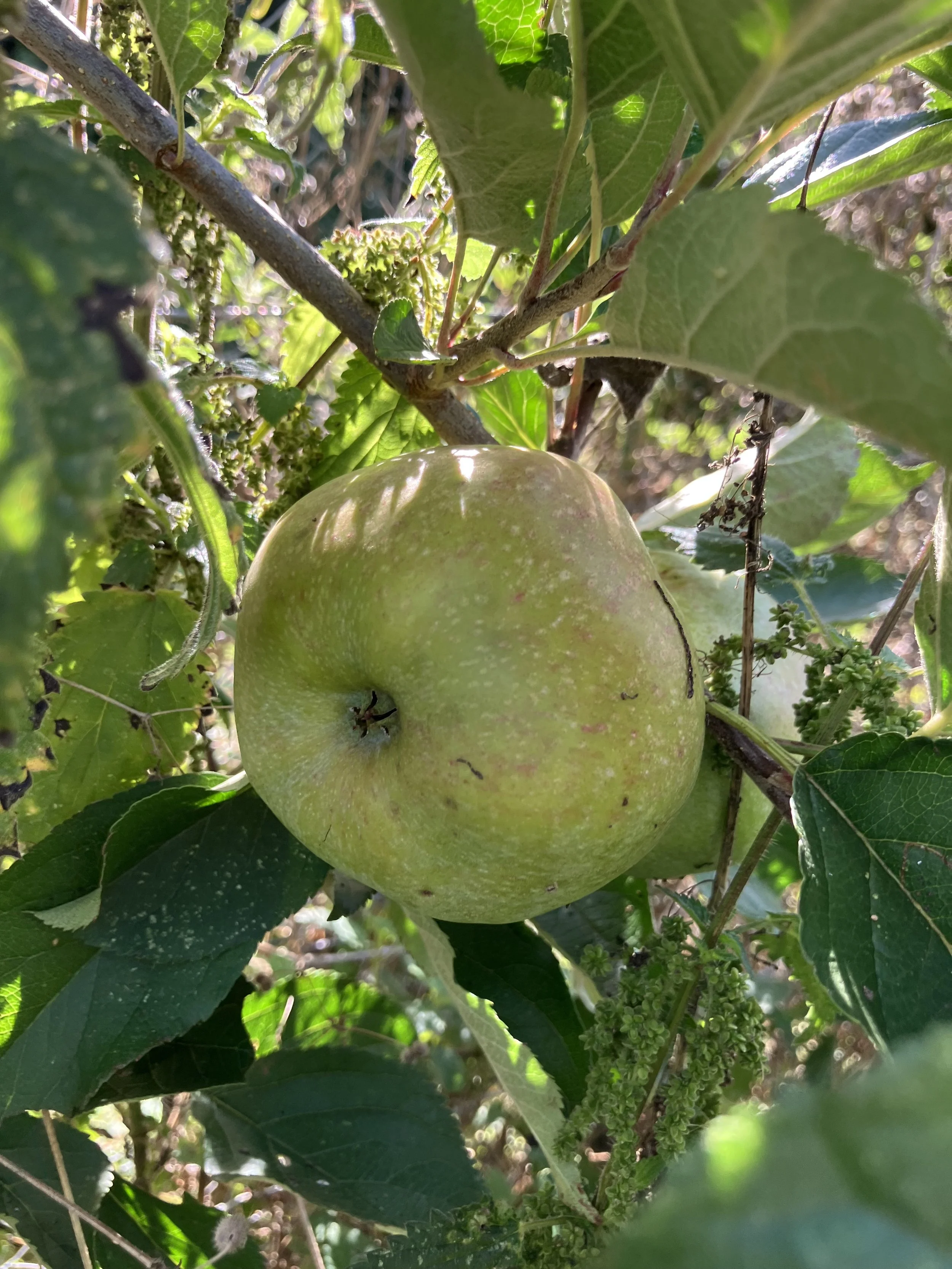
Porter’s Perfection (BSH) (Large)
A proper Somerset Bittersharp, originating from East Lambrook in the mid 19th Century. A vigorous cropper of small, red apples.
Pollination Group 3 (mid), matures November.
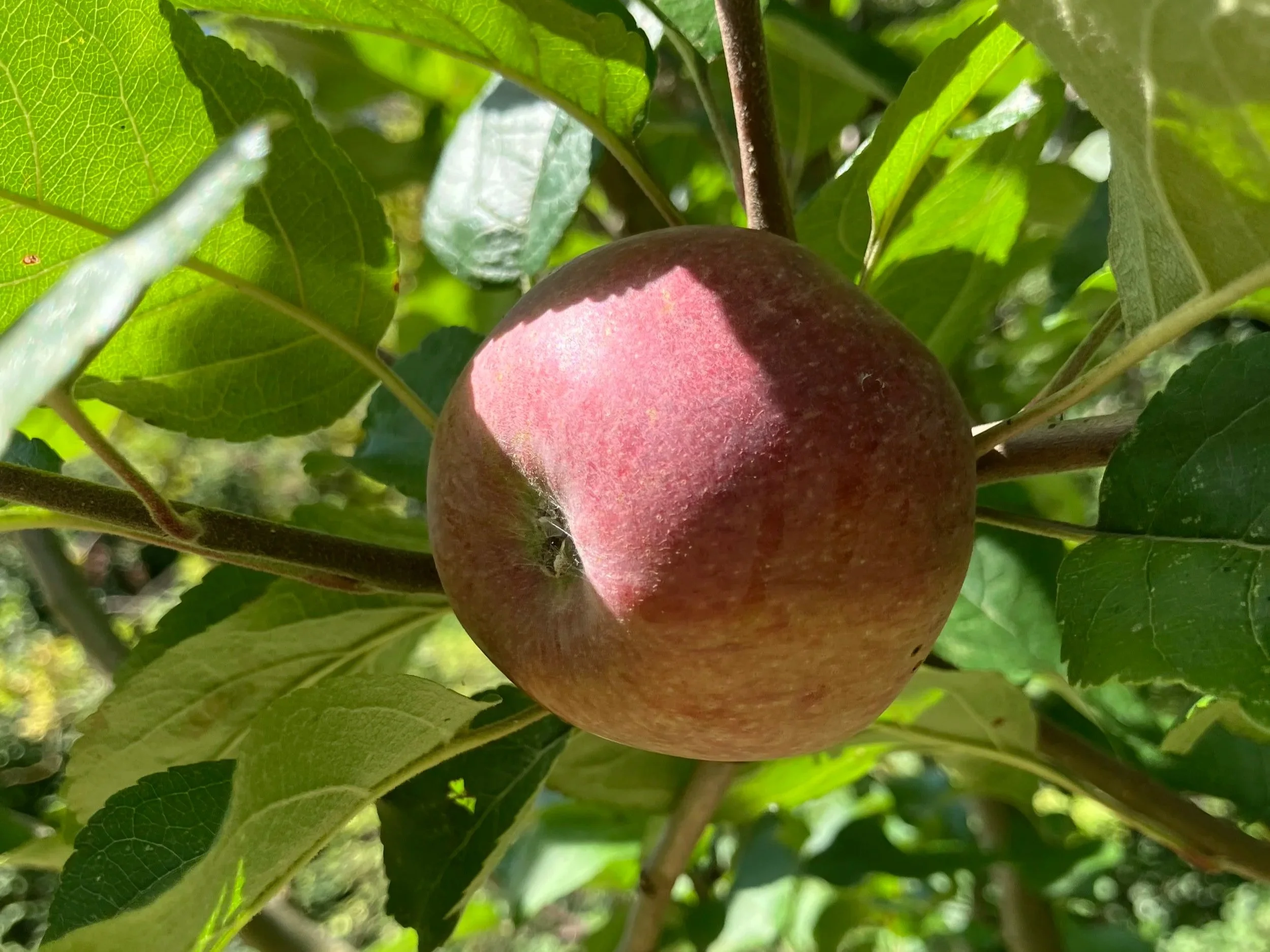
Tom Putt (SH) (Large)
Makes a delicous single variety fruit juice, and also used as an eater. Originates from Honiton, Devon. An excellent variety.
Pollination Group 3 (mid), harvests September.
IMAGE COMING SOON
Lambrook Pippin (BSH) (Large)
A wonderful Somerset variety, again coming out of Martock.
Early pollinator, harvest November.
IMAGE COMING SOON
Kingston Black (BSH) (Large)
Possibly the most well known cider variety there is and of course it is from Somerset! Also known as ‘Black Taunton’.
Pollination Group 3 (mid), harvest Nov..
Stoke Red (SH) (Dwarf)
Originating in Rodney Stoke, Somerset and once a very prolific cider variety across the county. Similar in looks to Kingston Black with its ‘reddy purpley’ fruit, it makes an excellent addition to any cider mix.
Pollination Group 4 (late), harvest Oct. / Nov.
Crab apples
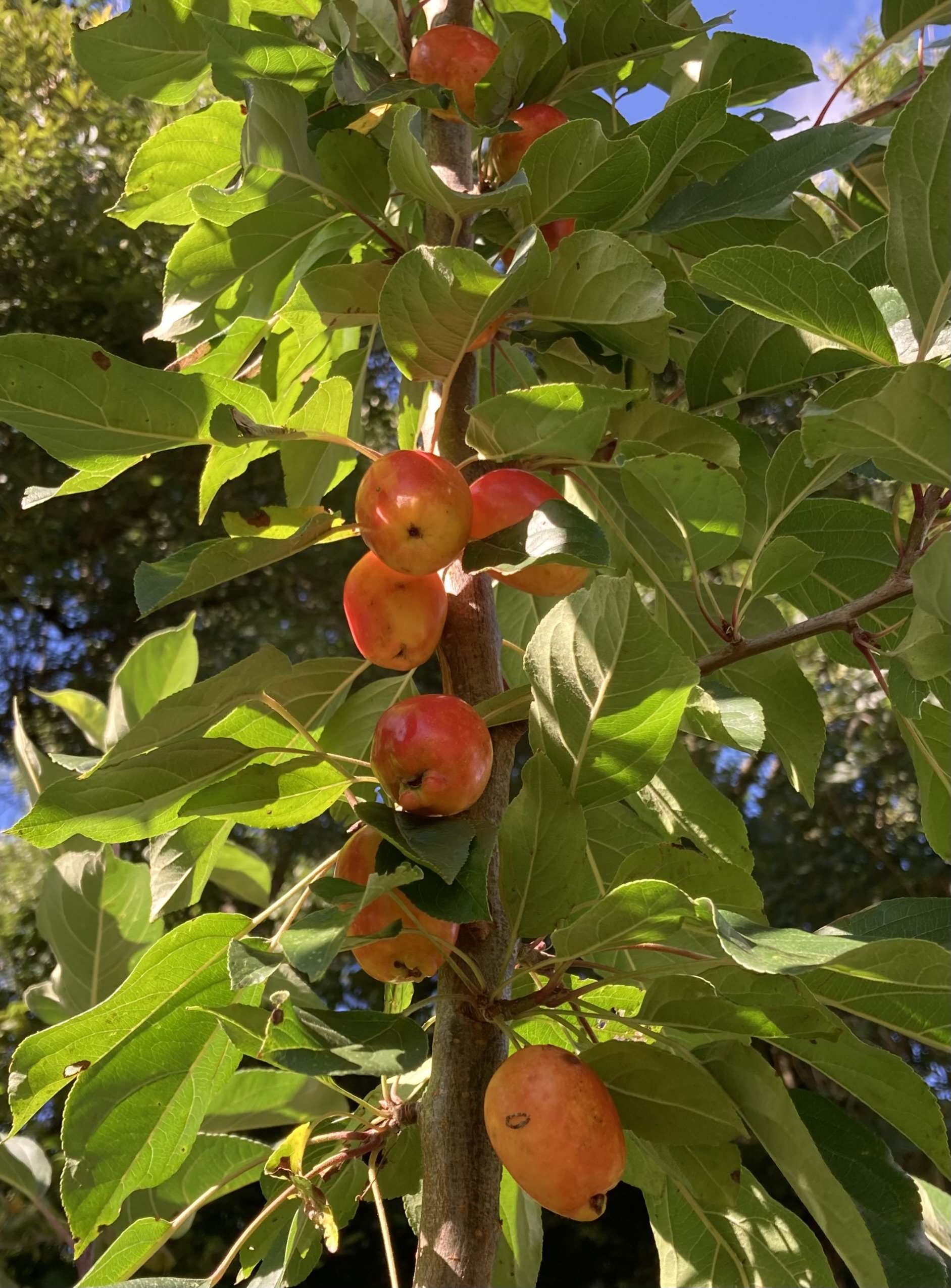
Generally used as ornamental trees or pollinators for other apple trees, due to their extensive blossom and inedible fruit. John Downie is the exception - it’s the tree for crab apple jelly!
John Downie (Large)
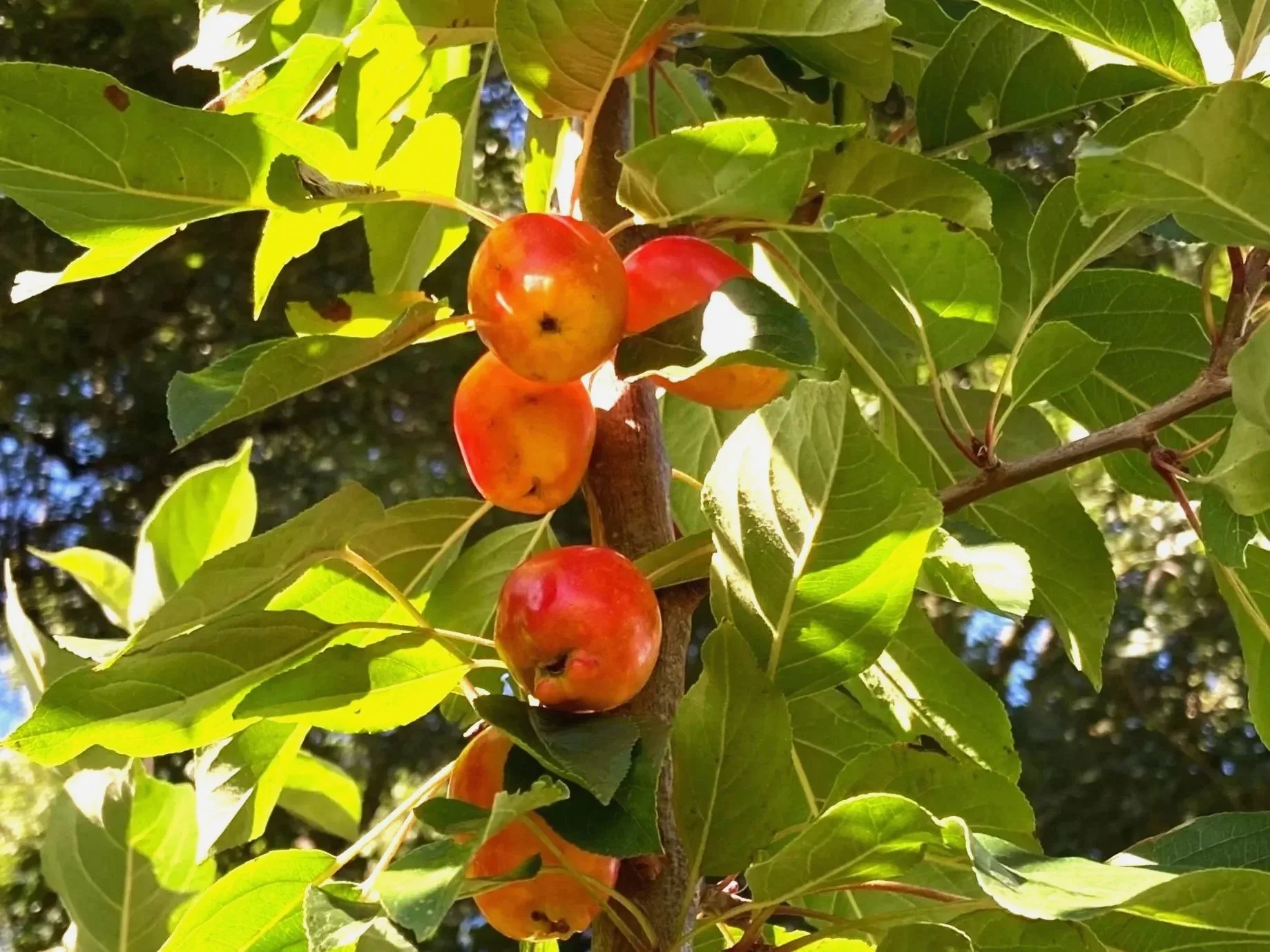
A very pretty tree, with orangy red fruit (see picture above), that makes the best crab apple jelly around. Pretty blossom also makes this a nice ornamental tree for the garden.
Gardeners Gold (Dwarf)
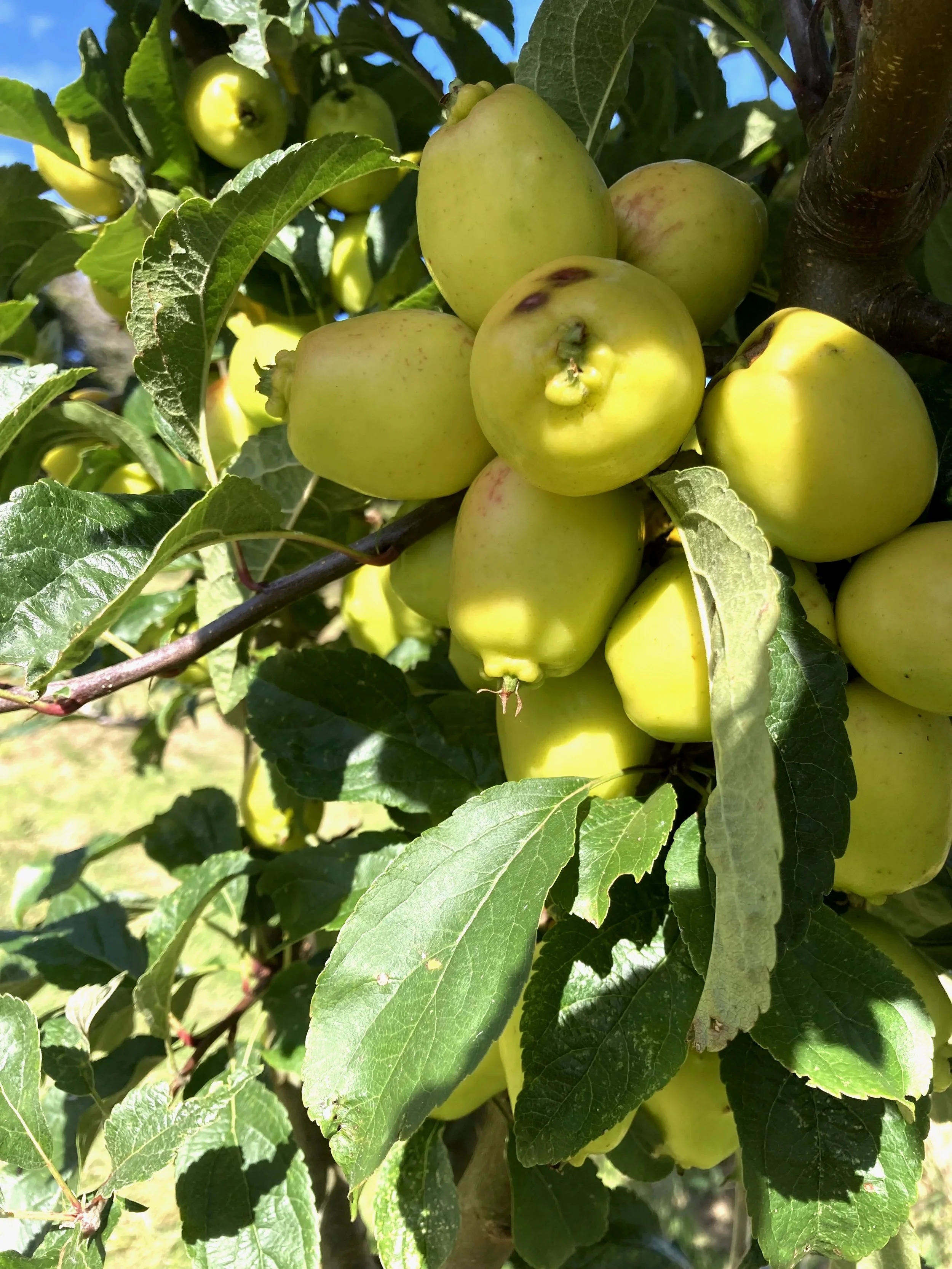
Pretty pink blossom, and almost quince like looking fruits.
Another great one, if not quite as famous, for crab apple jelly.
More to come
Watch this space!